
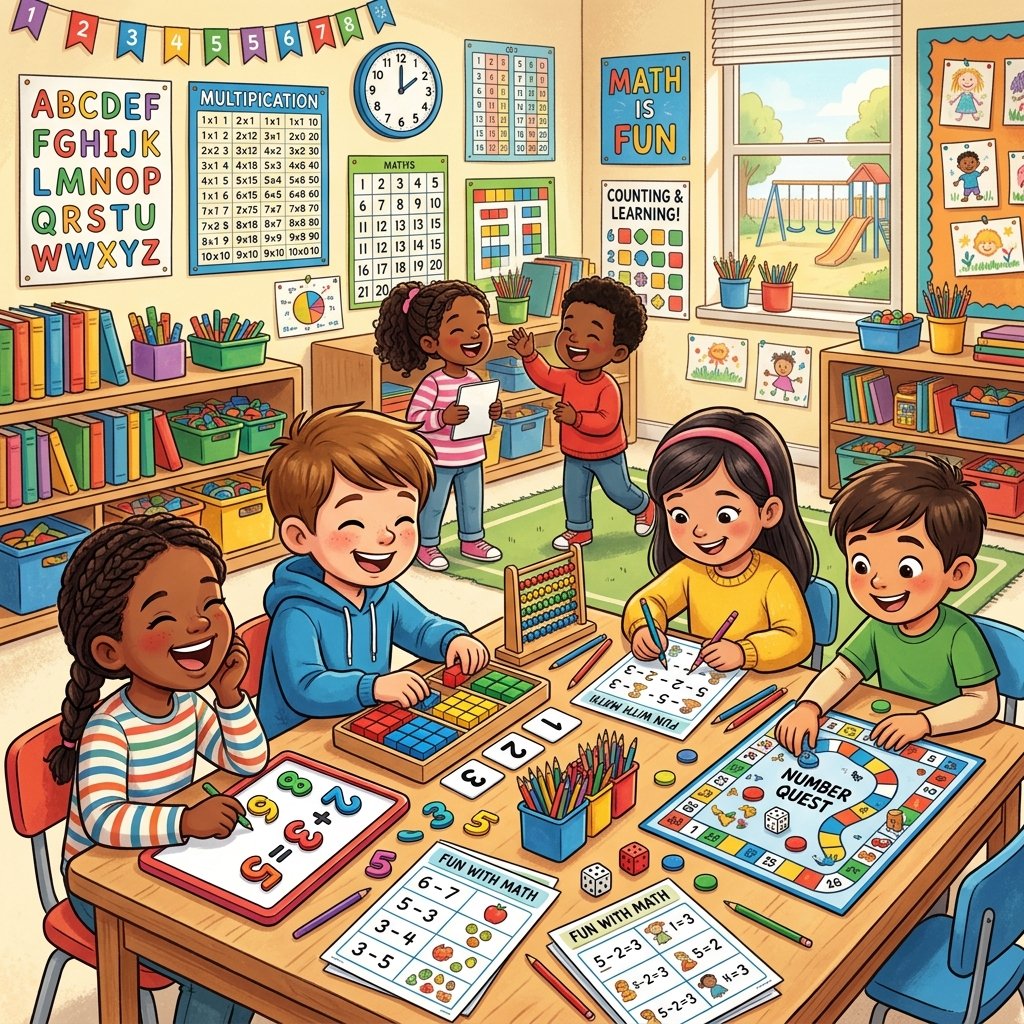
2nd grade math worksheets are most useful when they support a clear skill, reveal a child’s thinking, and lead to a short conversation—not when they simply fill time. Second-grade learners commonly work with addition and subtraction, place value, measurement, time, money, data, and shapes. A worksheet can provide independent practice after a concept has been modeled with objects and drawings. This guide explains what to look for, how to choose an appropriate page, how to respond to mistakes, and how to connect pencil-and-paper questions to practical math at home.
In this guide
Getting ready safely
Check the directions, number range, vocabulary, and expected method before handing over a page. Choose ten to fifteen focused questions rather than a crowded mixed review when a skill is new. Keep counters, base-ten blocks or bundled sticks, a number line, coins, ruler, clock model, and scrap paper available. The Common Core grade-two overview includes operations and algebraic thinking, base-ten understanding, measurement and data, and geometry; local standards may organize or sequence these skills differently, so coordinate with the child’s teacher.
For related learning ideas, explore our math worksheets hub. For additional background, see Common Core mathematics standards.
2nd Grade Math Worksheets: Skills to Practice
1. Addition within 20
Use fact families, ten frames, and missing-addend problems. Ask the child to explain whether they made ten, counted on, used doubles, or chose another efficient strategy.
2. Subtraction within 20
Mix take-away and comparison stories so subtraction is not tied to one wording. Model with counters first, then connect the action to an equation.
3. Place value to hundreds
Represent a number with hundreds, tens, and ones in pictures and expanded form. Include zero in a place, such as 304, to check real understanding.
4. Compare three-digit numbers
Use greater-than, less-than, and equal symbols only after comparing the hundreds, tens, and ones aloud. Have the child justify one choice with place-value language.
5. Two-digit addition
Begin with drawings or base-ten blocks and connect regrouping to exchanging ten ones for one ten. Accuracy matters, but an understandable strategy matters too.
6. Two-digit subtraction
Use problems both with and without regrouping. Ask the child to estimate first so an unreasonable answer, such as a result larger than the starting amount, is easier to notice.
7. Equal groups
Draw equal groups and repeated addition as foundations for later multiplication. Keep the focus on how many groups and how many in each group.
8. Length measurement
Measure real objects with the same unit, align the ruler at zero, and compare estimates with results. Include centimeters and inches only after unit meaning is clear.
9. Time to five minutes
Match analog clock faces with digital times and discuss hour-hand movement. Practice with daily events so time is more than isolated clock pictures.
10. Money combinations
Build the same value in several ways with real or play coins. Name each coin, count carefully, and note that coin size does not determine value.
Need another direction? Browse more math resources for kids and adapt one idea to the child’s age, interests, and available space.
11. Picture and bar graphs
Read titles, labels, scales, and categories before answering. Ask one question that requires combining or comparing data rather than simply copying a bar height.
12. Shapes and attributes
Sort shapes by sides, angles, and faces. Include shapes in different orientations so children rely on attributes instead of one familiar visual position.
13. Word-problem models
Have the child underline the question, draw the situation, write an equation, and label the answer. Avoid teaching keyword tricks that fail when language changes.
14. Mental math
Use short sets involving ten more, ten less, doubles, and near doubles. Ask for reasoning, then verify with a written method or objects.
15. Mixed review
Combine previously mastered skills only after focused practice. Mark which errors came from calculation, vocabulary, attention, or concept understanding before selecting the next activity.
A simple learning routine
Try a fifteen-minute routine: two minutes of mental warm-up, three minutes modeling one example, seven minutes of independent or supported worksheet practice, and three minutes reviewing one correct answer and one mistake. Ask “How did you know?” more often than “Did you get it right?” If several answers show the same misunderstanding, stop the page and return to objects or drawings. Finishing fewer questions with understanding is more valuable than completing a full sheet through guessing.
Keep a small note of what the child attempted, what felt easy, and what deserves another try. For printable or hands-on follow-up, visit hands-on activities for kids. Progress is easier to see when adults compare a child with their earlier work rather than with siblings or classmates.
Common mistakes to avoid
A worksheet should not introduce an unfamiliar idea without explanation, replace hands-on learning, or become a punishment. Do not erase every error before discussing it; mistakes show the strategy a child used. Avoid pages with tiny print, ambiguous images, inconsistent notation, or far more repetition than the learner needs. Answer keys help adults check results, but they should not replace listening to reasoning. If a child is consistently overwhelmed, reduce the number range or prerequisite complexity and consult the teacher.
How to adapt the activity
For a younger learner, reduce the number of steps, model one action at a time, and offer two choices instead of an open-ended decision. For an older or more experienced child, ask them to plan materials, predict an outcome, explain a strategy, or teach the activity to someone else. Adapt tools, movement, noise, timing, and communication so the child can participate meaningfully. Breaks and alternative roles are valid supports, not rewards that must be earned.
How to know the activity worked
Success is not limited to a perfect finished product or score. Look for attention, safe tool use, clearer explanation, willingness to revise, independent choices, and enjoyment. Ask three closing questions: “What did you notice?”, “What was difficult?”, and “What would you do differently next time?” Record one sentence or photo if the child agrees. This reflection turns a pleasant activity into reusable learning without making it feel like a test.
Frequently asked questions
How many worksheet problems should a second grader do?
There is no universal number. Ten focused problems may be enough when a skill is new, while a fluent learner may complete more. Stop when accuracy and attention clearly decline.
Should second graders use manipulatives?
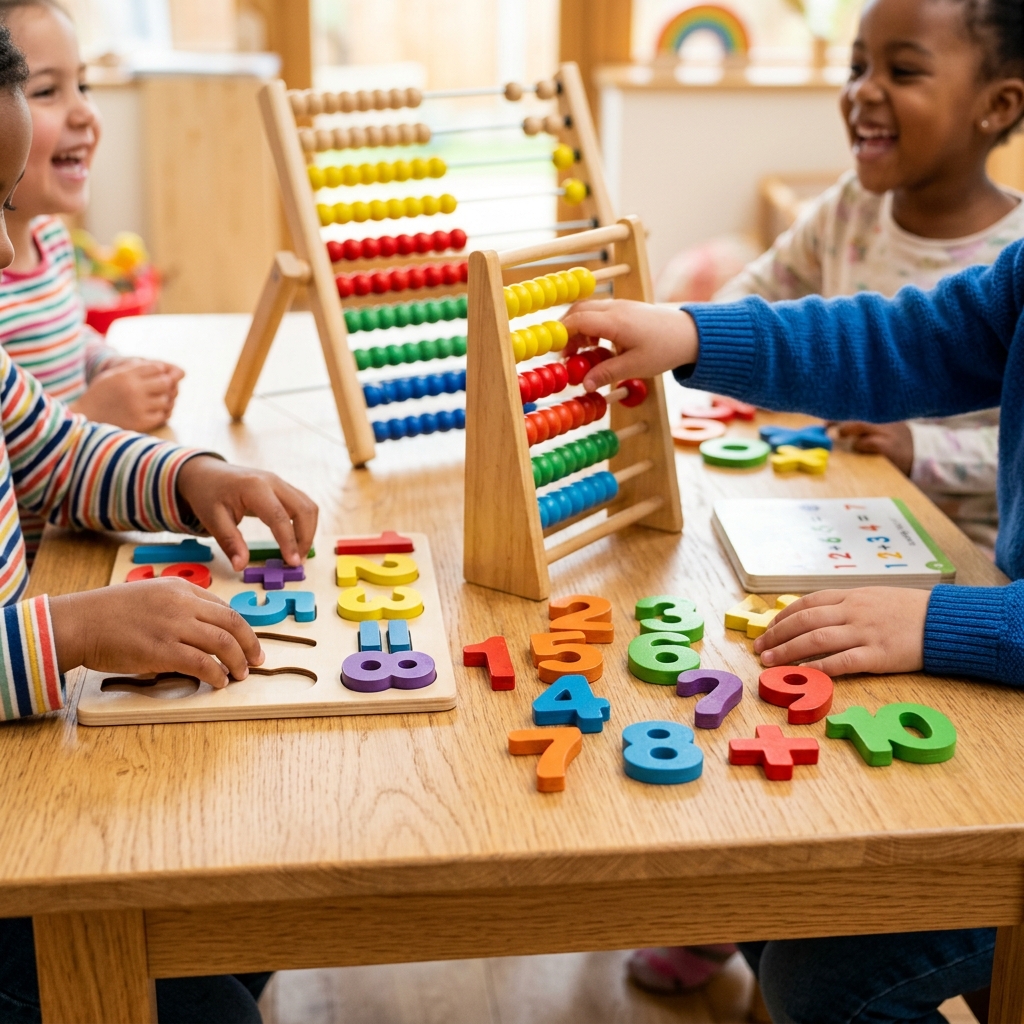
Yes. Counters, base-ten blocks, number lines, coins, rulers, and clock models help connect symbols to quantities and actions. Gradually reduce support as understanding becomes stable.
What math skills are common in second grade?
Common areas include addition and subtraction, place value, measurement, time, money, data, and geometry. Exact expectations and sequencing vary by curriculum and location.
How should I correct worksheet mistakes?
Ask the child to explain the strategy, identify the first step that changed course, and retry with a model or smaller numbers. Correct one pattern at a time rather than marking the entire page wrong.
Are timed math worksheets helpful?
Brief timing can measure fluency for some confident learners, but it can also create anxiety and encourage guessing. Conceptual understanding and accurate strategy should come before speed.
Choosing the next worksheet from the evidence
Sort errors before selecting more practice. If a child solves 42 minus 18 as 36, ask them to model the problem; the issue may be regrouping rather than subtraction facts. If a measurement answer is wrong, check whether the ruler began at zero and whether the unit was named. In a word problem, separate reading difficulty from mathematical reasoning by reading the prompt aloud. These quick checks prevent adults from assigning another page that repeats the same confusion without teaching the missing idea.
The next worksheet should be slightly easier in only the troublesome dimension. Keep the concept but lower the number range, reduce the number of questions, add visual models, or provide a worked example. After several accurate supported problems, remove one support and check again. Save mixed review for skills the child can already explain. Once a week, invite the learner to choose one completed problem and teach the method to an adult or toy. Explanation reveals whether a procedure has meaning and gives the child useful mathematical language such as tens, ones, difference, estimate, unit, and equal.
A worked example for families
For the problem “There are 36 red beads and 27 blue beads; how many beads altogether?”, first ask the child to estimate. Thirty plus thirty is about sixty, so an answer near sixty is reasonable. Next, represent 36 as three tens and six ones and 27 as two tens and seven ones. Combine the ones, exchange ten ones for one ten, and then count six tens and three ones: 63. Write the vertical equation only after the model makes sense. Finally, check with subtraction or by adding in a different order. This short sequence connects a story, estimate, concrete model, written method, and check instead of presenting regrouping as a mysterious rule.
Final thoughts
Start small, prepare the environment, and let the child’s response guide the next step. A short activity that ends with curiosity is more valuable than a complicated plan completed under pressure. Save the ideas that fit your family or classroom, repeat the favorites, and change only one challenge at a time so children can notice their own progress.