
Summer activities for kids do not need a packed calendar, expensive camp, or elaborate supplies. A flexible rhythm of outdoor movement, quiet creativity, reading, practical responsibility, and family connection gives children both stimulation and rest. The list below includes backyard, neighborhood, indoor, and low-cost ideas that can be adapted to age, weather, available space, and disability. Choose a few options each week, invite children to help plan, and leave unscheduled time for independent play rather than trying to fill every hour.
In this guide
Getting ready safely
Create a small summer kit with sunscreen, hats, refillable water bottles, a basic first-aid kit, chalk, paper, washable art supplies, magnifying glasses, and a library bag. Check the weather and local air-quality or heat alerts before outdoor plans. The U.S. Centers for Disease Control and Prevention recommends helping children stay active while taking precautions for heat and sun. Choose cooler parts of the day, provide frequent water and shade breaks, and stop activity if a child feels unwell. Follow local water, traffic, insect, and supervision guidance.
For related learning ideas, explore more fun activities for kids. For additional background, see CDC summer health guidance.
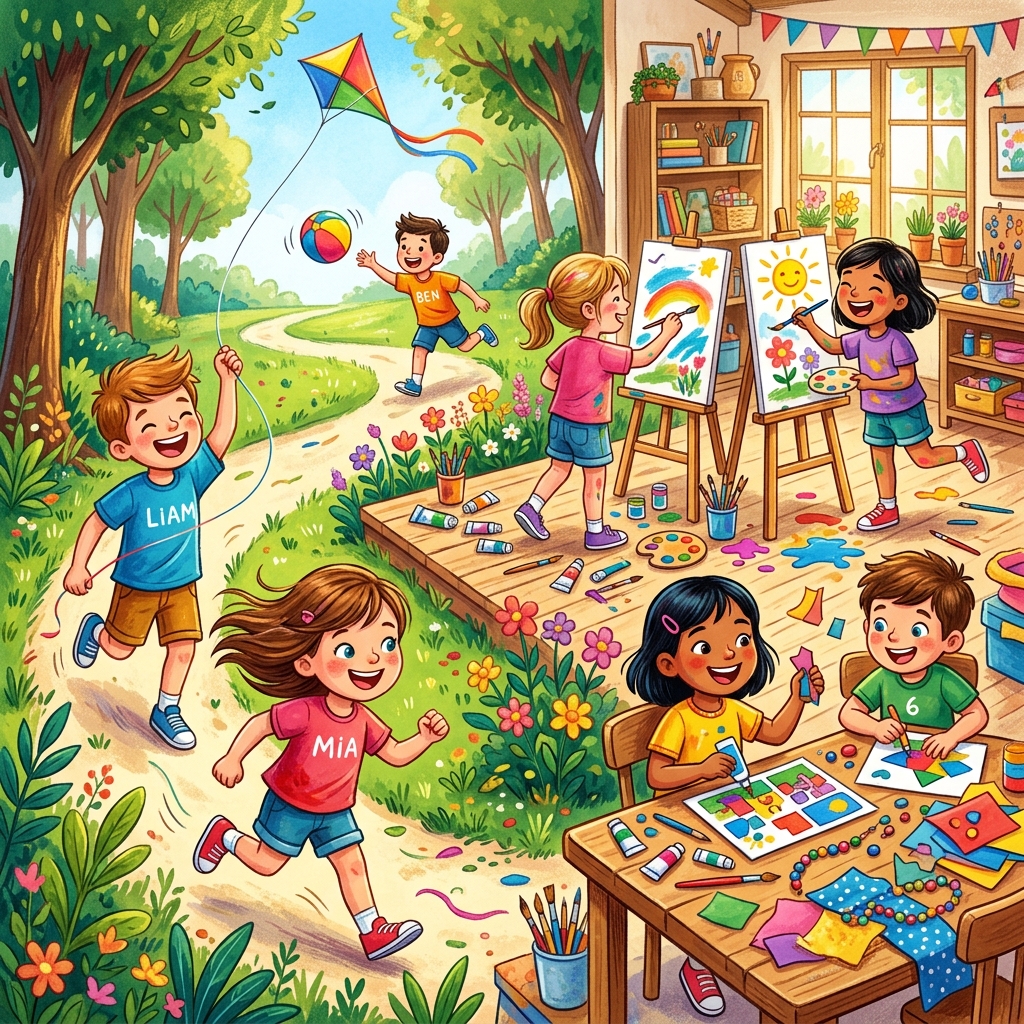
Summer Activities for Kids: 25 Flexible Ideas
1. Backyard obstacle course
Arrange cones, chalk lines, cardboard boxes, and safe stepping spots. Let children redesign the route and choose movements so the course stays fresh without buying equipment.
2. Neighborhood color walk
Choose one color and photograph or sketch examples found on a supervised walk. Return home to sort discoveries by natural and human-made objects.
3. Library challenge
Set a family reading goal based on minutes or variety rather than book count. Include comics, nonfiction, audiobooks, poetry, and books children reread for comfort.
4. Sidewalk chalk city
Draw roads, parks, shops, and homes, then use toy figures to create stories. Add street signs and simple maps for literacy and spatial thinking.
5. Water-painting wall
Give children clean brushes and a bucket of water to paint temporary designs on a fence or pavement. Use a stable container and supervise around wet surfaces.

6. Nature journal
Visit the same outdoor spot weekly and draw weather, plants, animals, and seasonal changes. Observe without handling unfamiliar wildlife or plants.
7. Family picnic planning
Let children choose a location, make a list, count servings, pack reusable supplies, and help clean up. Follow food-temperature and allergy safety practices.
8. Cardboard construction
Save clean boxes and tubes for a fort, marble-free maze, robot, or pretend shop. Adults should handle strong cutting tools and remove staples.
9. Frozen-toy rescue
Freeze a few washable toys in a container of water and provide warm water, droppers, and safe tools for melting. Use large toys and protect surfaces.
10. Photo scavenger hunt
Make a list of shapes, textures, letters, and colors to photograph. Children collect images rather than taking objects from nature or private property.
Need another direction? Browse rainy-day indoor activities and adapt one idea to the child’s age, interests, and available space.
11. Homemade bubble study
Compare wand shapes, bubble sizes, and wind conditions using a child-safe bubble solution. Keep solution out of eyes and clean slippery spills immediately.
12. Garden helper day
Water plants, pull identified weeds with gloves, measure growth, or grow herbs in a container. Confirm plants are non-toxic and supervise tool use.
13. Outdoor story theater
Choose a familiar story, assign roles, make simple paper props, and perform in a shady space. Children who dislike performing can narrate or manage props.
14. Bike or scooter skills
Practice helmet checks, starts, stops, and turns in a traffic-free area. Match the equipment to the child and follow local safety rules.
15. Cloud observation
Lie in shade, identify shapes, notice movement, and sketch cloud cover. Never look directly at the Sun, even through sunglasses.
16. Kitchen measurement
Prepare a simple no-cook recipe while counting, measuring, and reading directions. Check allergies, wash hands, and have adults manage sharp tools.
17. Family game tournament
Select cooperative and competitive games, rotate partners, and track fair-play points. Include a quiet puzzle station for children who need a break.
18. Community kindness project
Write thank-you notes, collect approved donation items, or help a neighbor with a small supervised task. Contact organizations first to learn what is useful.
19. Shadow art
Trace the shadow of a toy in morning and afternoon, then decorate the outlines. Compare how length and direction changed over time.
20. Indoor camping
Build a reading tent from chairs and a sheet, use flashlights safely, tell stories, and prepare a simple snack. Keep fabric away from lamps and heaters.
21. Music-and-movement jar
Fill a jar with cards naming dances, stretches, rhythms, or freeze poses. Draw several cards for a ten-minute energy break.
22. Recycled art studio
Use clean packages, paper scraps, yarn, and tape for open-ended sculpture. Inspect materials for sharp edges, residue, and choking hazards first.
23. Local map adventure
Mark a library, park, or landmark on a printed map and plan a supervised route. Discuss symbols, distance, accessibility, and safe crossings.
24. Quiet audiobook drawing
Listen to an age-appropriate audiobook while drawing a setting or character. Pause occasionally to predict what might happen next.
25. Summer memory book
Add one page each week with a drawing, photo, ticket, new word, or short reflection. The book values ordinary moments as much as special outings.

A simple learning routine
Use a weekly pattern instead of a strict daily timetable: one library or reading goal, one creative project, one nature observation, one active outing, one practical helping task, and plenty of free choice. Post two or three options each morning and let children vote. Keep a rainy-day backup that needs no special shopping. When an activity is going well, extend it; when attention disappears, stop. Summer memories grow from participation and connection, not from completing a checklist.
Keep a small note of what the child attempted, what felt easy, and what deserves another try. For printable or hands-on follow-up, visit easy crafts for kids. Progress is easier to see when adults compare a child with their earlier work rather than with siblings or classmates.
Common mistakes to avoid
Avoid scheduling every moment, comparing one family’s summer with social-media highlights, or assuming outdoor play is automatically safe. Heat, water, traffic, insects, air quality, and sun exposure require active adult judgment. Do not make every activity secretly academic; curiosity and unstructured play have value. Plan for different energy levels, sensory needs, mobility, and access to outdoor space. A successful summer plan should reduce family stress, not become another demanding curriculum.
How to adapt the activity
For a younger learner, reduce the number of steps, model one action at a time, and offer two choices instead of an open-ended decision. For an older or more experienced child, ask them to plan materials, predict an outcome, explain a strategy, or teach the activity to someone else. Adapt tools, movement, noise, timing, and communication so the child can participate meaningfully. Breaks and alternative roles are valid supports, not rewards that must be earned.
How to know the activity worked
Success is not limited to a perfect finished product or score. Look for attention, safe tool use, clearer explanation, willingness to revise, independent choices, and enjoyment. Ask three closing questions: “What did you notice?”, “What was difficult?”, and “What would you do differently next time?” Record one sentence or photo if the child agrees. This reflection turns a pleasant activity into reusable learning without making it feel like a test.
Frequently asked questions
How can I plan summer activities on a budget?
Use libraries, public parks, household recyclables, neighborhood walks, simple water play, drawing, and family games. Plan around materials you already own and check local community calendars for free events.
How many activities should we schedule each day?
One planned activity may be enough. Leave room for meals, chores, rest, reading, conversation, and independent play. A predictable weekly rhythm is often easier than a crowded daily agenda.
What can kids do on very hot days?
Choose cool indoor spaces, water play with supervision, libraries, crafts, audiobooks, and short movement breaks. Follow local heat alerts and postpone strenuous outdoor activity when conditions are unsafe.
How do I reduce summer screen time?
Offer visible choices, prepare supplies, join the first few minutes, and create consistent device-free periods. Avoid treating all screen use as identical; video calls and creative projects differ from passive scrolling.
How do I adapt activities for different ages?
Give children different roles in the same project: younger children collect or sort, while older children measure, plan, read directions, or photograph results. Adjust safety supervision for each child.
Build an inclusive summer choice board
Divide a page into choices for moving, making, reading, helping, exploring, and resting. Add pictures for children who do not yet read and mark which activities need an adult, travel, or particular weather. Include seated movement, low-noise options, shaded locations, and ways to participate without touching messy materials. Let each child add one personal idea and one “not today” option. The board should make decisions easier, not require every square to be completed.
At the end of the week, ask which activity the family would repeat, simplify, or skip. Restock only the supplies that were actually useful and keep a short list of free local resources. If an outing is cancelled by heat, rain, illness, or transportation, name the change calmly and offer one backup rather than rebuilding the entire day. Flexible planning teaches children that a good summer does not depend on perfect weather or constant entertainment; it depends on safe choices, shared attention, and enough open time for ideas to develop.
Final thoughts
Start small, prepare the environment, and let the child’s response guide the next step. A short activity that ends with curiosity is more valuable than a complicated plan completed under pressure. Save the ideas that fit your family or classroom, repeat the favorites, and change only one challenge at a time so children can notice their own progress.