
Math & Counting
Math doesn't have to be scary. We turn arithmetic into adventures with hands-on counting games, addition battles, multiplication memory tricks, and geometry crafts. Every activity meets kids where they are and builds genuine number sense.
✨ Key Takeaways
- Math sense starts at 2: Counting steps, sorting toys, comparing sizes builds foundations.
- Skip the tears: Math anxiety is contagious from parents. Stay positive, even if you struggled.
- Memorization milestones: Addition facts by end of 1st grade, multiplication by end of 3rd.
- Real-world math wins: Cooking, shopping, and games teach more than worksheets.
- Practice volume: 10 minutes of daily math beats 70 minutes once a week.
Latest Math & Counting Articles
7 Ultimate Math Worksheets and Resources for Kids
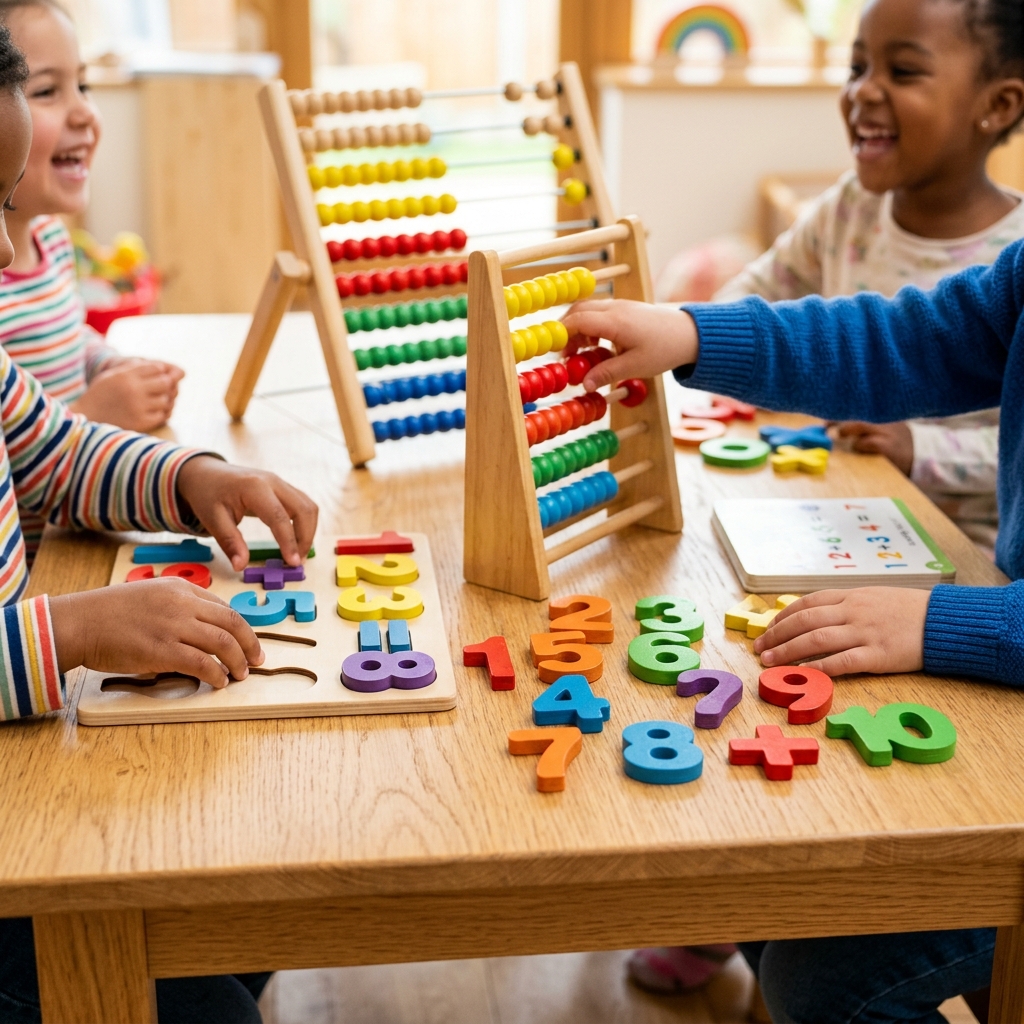
Welcome to the ultimate guide for early childhood mathematics! Math doesn’t have to be intimidating or boring. With the right math worksheets and interactive educational games, you can make numbers the absolute most exciting part of your child’s day. In this highly detailed, comprehensive guide, we will explore the best ways to teach mathematics at …Read More
9 Best Math Worksheets & Interactive Games for Kids

Transform numbers from a source of stress into an exciting challenge with the best math worksheets, interactive counting games, and geometry activities.Read More
Frequently Asked Questions
How do I help my child memorize multiplication tables?
Daily 5-minute drill of one table at a time, mastered before moving on. Use songs (skip-counting), arrays (visual), and games. Most kids master 0–12 tables by end of 3rd grade. Our free multiplication worksheet has 20 mixed problems.
What math should a 5-year-old know?
By age 5 most kids can: count to 20+, recognize numbers 0–10, understand more/less, do simple addition with objects (3+2 using fingers), recognize basic shapes, and identify patterns. Don't worry about written math yet.
My child hates math. How do I fix this?
Investigate the root: anxiety, missing skill, or boredom? Drop tears-triggering work for 1 week. Play number games (war, Yahtzee, Sum Swamp). Cook together (fractions). Show real math you use daily. Math anxiety is fixable.
Best apps for math practice?
Free: Khan Academy Kids (PreK–2), Prodigy (K–8), DragonBox (algebra prep). Paid: Beast Academy (advanced 1–5), IXL (curriculum-aligned). Limit to 15–20 min/day — paper practice still beats screens for retention.
How important is finger counting?
Very important. Research shows finger counting predicts later math achievement. Don't discourage it before age 7–8 — it's how brains build number sense. Gradually transition to mental math through games and pattern recognition.