
Minute to win it games for kids bring energy to birthday parties, classrooms, family nights, and rainy afternoons without requiring expensive equipment. Each challenge lasts about sixty seconds, so children get repeated chances to try, laugh, adjust a strategy, and cheer for someone else. The best version is cooperative rather than harshly competitive: award points for participation, teamwork, or personal improvement as well as speed. Below you will find quick games using cups, paper, cotton balls, spoons, and other familiar materials, plus simple adaptations for different ages and abilities.
In this guide
Getting ready safely
Choose an open play area, remove trip hazards, and test every challenge yourself. Set out one labeled tray per game so transitions stay fast. Use soft, unbreakable items; avoid tiny pieces with young children and anything placed in the mouth. Explain the goal in one sentence, demonstrate once, and show where players should stand. A visible timer adds excitement, but a quiet signal or untimed practice round is better for children who find countdowns stressful. Build water breaks into a longer event and give every participant permission to skip a game.
For related learning ideas, explore educational games for kids. For additional background, see Harvard Center on the Developing Child play guide.
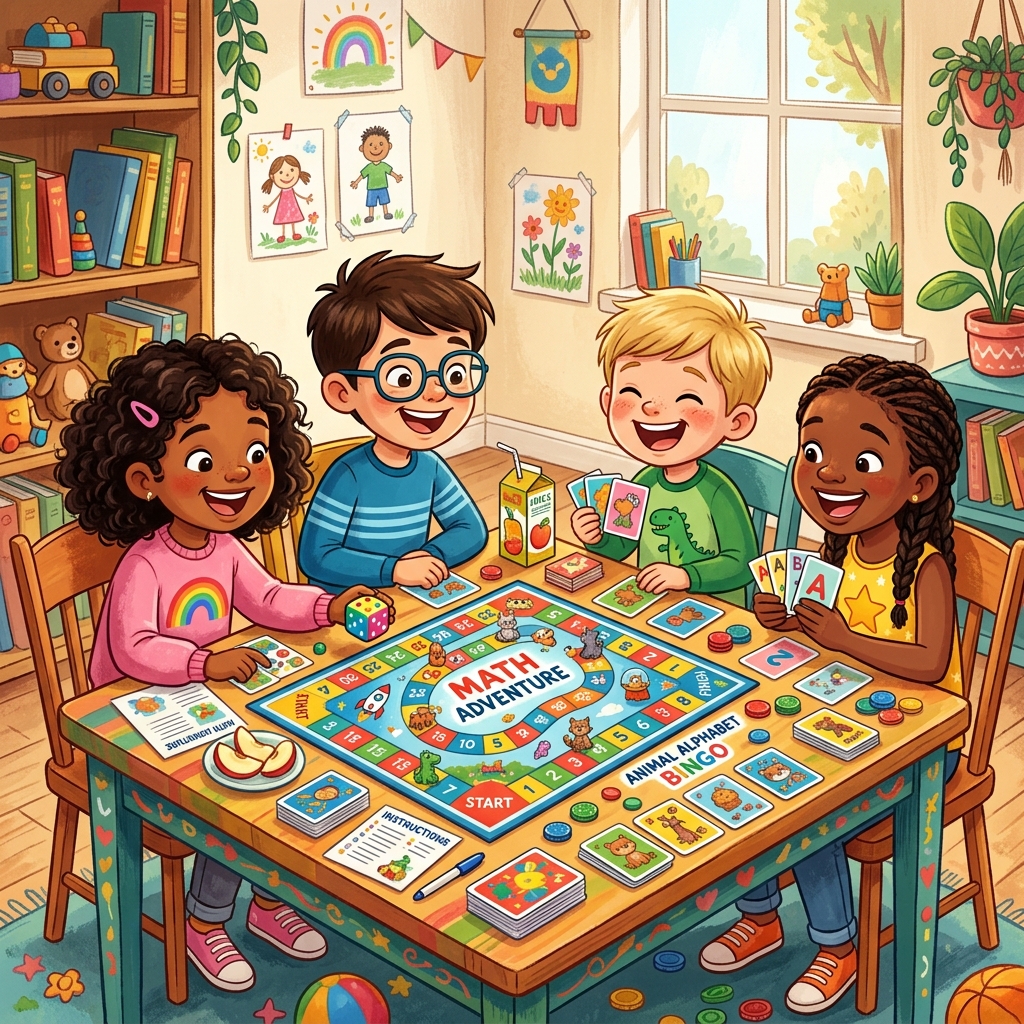
Minute to Win It Games for Kids: 25 Challenges
1. Cup tower
Stack ten plastic cups into a pyramid and return them to one pile before time ends. Younger players can use six cups; older players can try using only one hand.
2. Cotton-ball scoop
Move cotton balls between two bowls with a spoon. Place bowls close together for beginners and farther apart for a balance challenge. Count successful transfers, not dropped pieces.
3. Paper-plane landing
Fold a simple paper plane and earn points by landing it inside taped floor zones. Give each player several throws during the minute so one unlucky flight does not decide the game.
4. Sock basketball
Roll clean socks into balls and toss them into a laundry basket. Mark two distances and let children select the line that feels challenging but achievable.
5. Pencil balance
Balance pencils across the back of one hand, gently lift the hand, and catch them. Begin with one pencil and add another after each successful catch.

6. Sticky-note wall
Move sticky notes from one side of a table to a wall one at a time. The winner can be the player with the most notes still attached when the timer sounds.
7. Balloon keep-up
Keep one balloon in the air without holding it. Add a second balloon for teams or limit taps to elbows for an older group. Keep balloons away from children with latex allergies.
8. Coin stack
Stack large coins or plastic counters into the tallest stable tower. For younger children, use chunky blocks to remove choking risk while preserving the balancing challenge.
9. Cup bowling
Arrange lightweight cups as pins and roll a soft ball from behind a line. Reset quickly and total the number of cups knocked over across several attempts.
10. Color sort
Sort a mixed pile of large colored blocks or craft sticks into matching containers. Add shape as a second rule only when children have mastered the color version.
Need another direction? Browse our best games for kids and adapt one idea to the child’s age, interests, and available space.
11. Book balance walk
Walk a short taped path with a light paperback on the head. The goal is controlled movement, not running. Allow hands near the book for children who need support.
12. Pom-pom blow
Use a paper fan to move a pom-pom along a tabletop track. Avoid blowing through straws, which may encourage sharing mouth-contact items in a group setting.
13. Puzzle sprint
Complete a small age-appropriate puzzle or fit as many pieces as possible. Photograph the finished image first so children have a visual guide.
14. Spoon relay
Carry a ping-pong ball on a spoon around one chair and back. Players may walk, and the ball returns to the start after a drop rather than eliminating anyone.
15. Card-house challenge
Build the tallest free-standing structure from index cards. Folding is allowed for younger children; older players can try without bending the cards.
16. Dice total
Roll two large dice repeatedly and add each total to a score sheet. Use one die and tally marks for younger learners who are still connecting quantities with numerals.
17. Cup flip
Place a plastic cup partly over the table edge, tap it upward, and try to land it upright. Use a low table and clear the floor around players.
18. Paper-chain race
Create the longest linked chain from paper strips and tape. A partner version divides jobs into forming loops and attaching them, rewarding communication.
19. Eraser target
Slide a clean eraser across a table toward scoring lines without letting it fall. This is a calm choice between high-energy rounds.
20. Block transfer
Move blocks from one container to another using kitchen tongs. Large tongs and blocks make the task accessible to small hands.
21. Matching hunt
Turn over picture cards and find as many pairs as possible. Use fewer pairs for beginners and invite children to name each picture aloud.
22. Tape-line jump
Make parallel tape lines and count how many controlled two-foot jumps a player completes. Space lines safely and emphasize landing softly.
23. Build the bridge
Span the gap between two books using paper and tape, then test how many blocks the bridge holds. This turns the timer into a quick engineering problem.
24. Alphabet order
Arrange letter cards in sequence. Limit the set to the letters in a child’s name for beginners or use the complete alphabet for fluent learners.
25. Team tidy-up
Scatter safe game supplies and challenge the whole group to return them to labeled bins. Everyone wins if the room is organized before the minute ends.
A simple learning routine
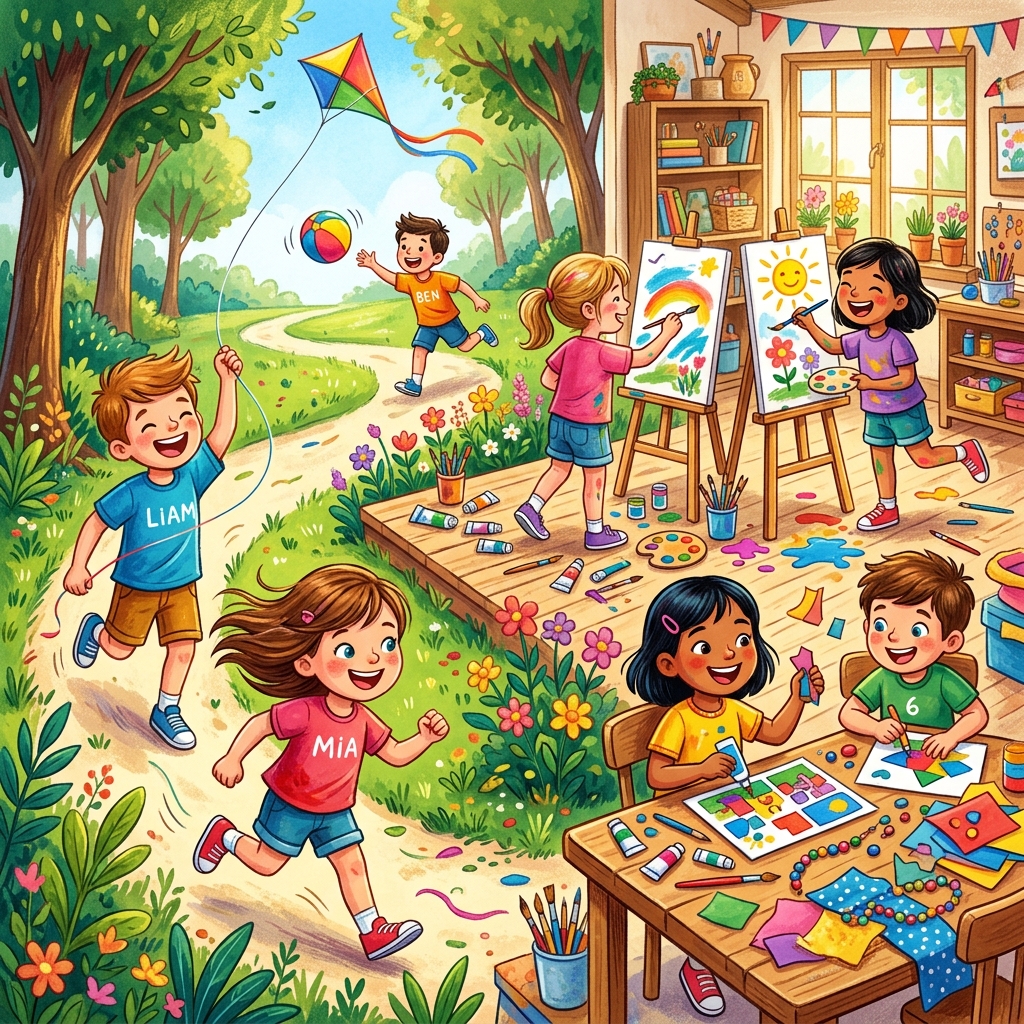
For a balanced event, alternate active, fine-motor, thinking, and teamwork stations. Four to six stations are enough for a thirty-minute session. Place children in small groups and rotate every three minutes: one minute for directions, one for play, and one for resetting. Record team points with stickers instead of ranking children publicly. Harvard’s Center on the Developing Child offers play resources that connect playful interaction with skills such as attention, self-control, and flexible thinking. Those skills grow when adults ask children what strategy they tried and invite a second attempt.
Keep a small note of what the child attempted, what felt easy, and what deserves another try. For printable or hands-on follow-up, visit more fun activities for kids. Progress is easier to see when adults compare a child with their earlier work rather than with siblings or classmates.
Common mistakes to avoid
Do not make every game elimination-based; children who lose early spend the event watching. Avoid challenges involving food in the mouth, blindfolded running, breakable objects, or rapid eating. Keep rules consistent, but adapt equipment or distance without calling attention to one child. When a score is disputed, replay rather than debate. The goal is shared fun and practice under a playful time limit—not finding the most athletic child in the room.
How to adapt the activity
For a younger learner, reduce the number of steps, model one action at a time, and offer two choices instead of an open-ended decision. For an older or more experienced child, ask them to plan materials, predict an outcome, explain a strategy, or teach the activity to someone else. Adapt tools, movement, noise, timing, and communication so the child can participate meaningfully. Breaks and alternative roles are valid supports, not rewards that must be earned.
How to know the activity worked
Success is not limited to a perfect finished product or score. Look for attention, safe tool use, clearer explanation, willingness to revise, independent choices, and enjoyment. Ask three closing questions: “What did you notice?”, “What was difficult?”, and “What would you do differently next time?” Record one sentence or photo if the child agrees. This reflection turns a pleasant activity into reusable learning without making it feel like a test.
Frequently asked questions
What age is best for minute-to-win-it games?
Many games work from about age four with simplified rules and close supervision. School-age children can manage longer sequences, scorekeeping, and team strategy. Choose equipment and difficulty based on the children in front of you.
How many games do I need for a party?
Plan five or six games for a thirty-minute activity block and keep two backups. Children often ask to repeat a favorite, so you rarely need to run every challenge you prepared.
Should every game last exactly one minute?
No. Sixty seconds creates a fun structure, but preschoolers may prefer an untimed practice or ninety seconds. Stop early if a challenge becomes frustrating or unsafe.
How can I make the games less competitive?
Use team totals, personal-best scores, participation points, or a shared mission. Praise strategy, encouragement, and careful resetting as much as speed.
What supplies should I avoid?
Avoid sharp, breakable, heavy, allergenic, or choking-hazard materials. Do not use tasks that require children to put shared objects in their mouths, and keep the play area free of obstacles.
Final thoughts
Start small, prepare the environment, and let the child’s response guide the next step. A short activity that ends with curiosity is more valuable than a complicated plan completed under pressure. Save the ideas that fit your family or classroom, repeat the favorites, and change only one challenge at a time so children can notice their own progress.