
To improve handwriting for kids, start with short, purposeful practice and a clear goal for each session. A good routine combines comfortable posture, clear letter models, large movement, and a small amount of meaningful writing. Use our Custom Handwriting Worksheet Generator to make practice match your child’s name, current letters, or spelling words, then connect the skill to real communication with the Writing Prompt Generator for Kids.
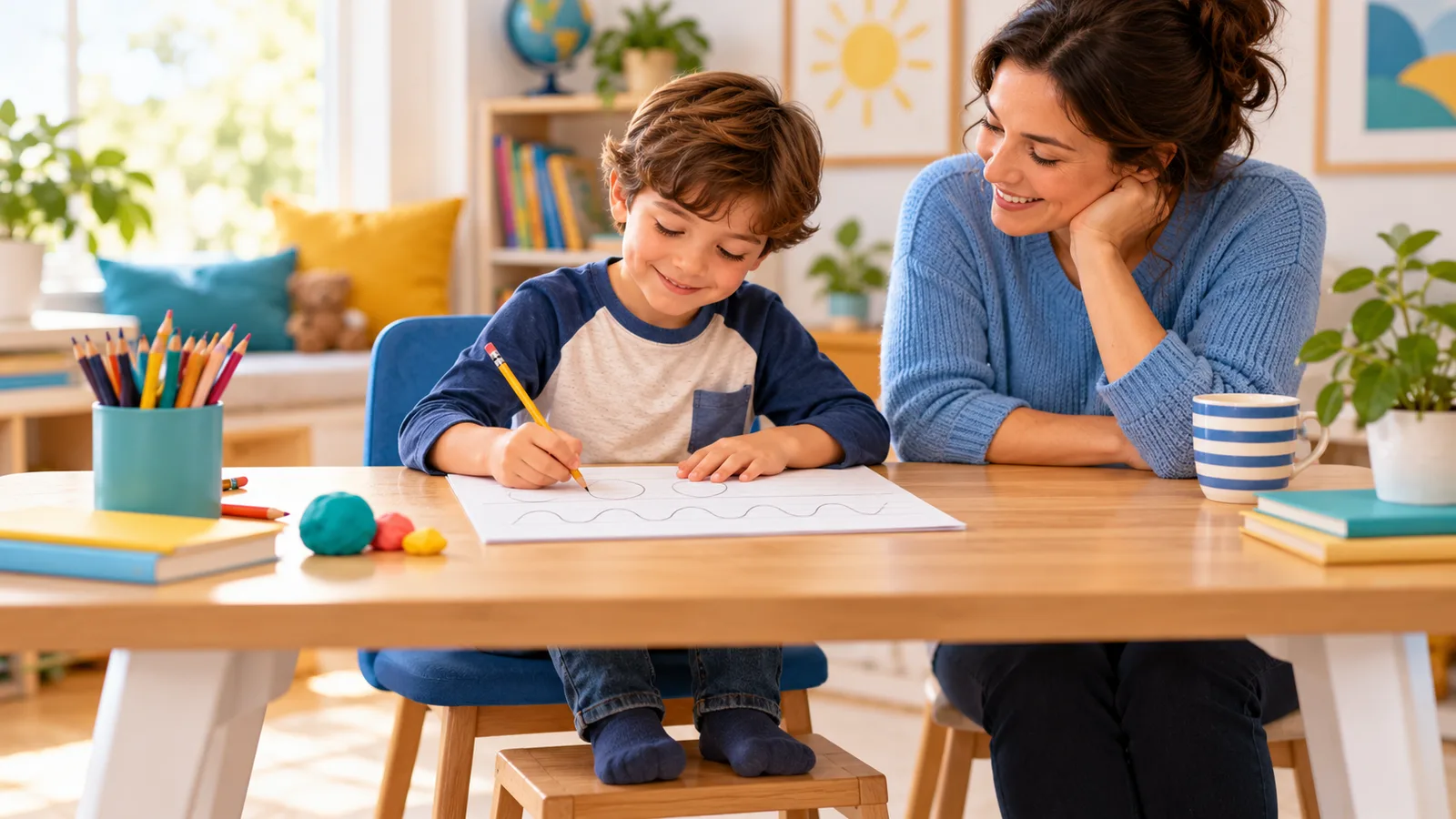
What Good Handwriting Practice Should Improve
Neatness is only one part of handwriting. The practical goal is legible, comfortable writing that a child can produce without excessive effort. Look at four areas separately:
- Letter formation: where each stroke begins and how the letter is built.
- Placement: whether letters sit on the baseline and use the available space.
- Spacing: consistent gaps inside words and a visible gap between words.
- Fluency: writing at a useful pace without sacrificing readability or comfort.
Choose one target at a time. A child who is forming letters accurately but crowding words needs spacing practice, not another page of alphabet tracing.
Set Up the Writing Space
Before correcting the page, check the environment. The chair and table should let the child sit steadily, with feet supported by the floor or a footrest. The paper should stay still and angle slightly toward the writing hand. Left-handed writers may benefit from positioning the paper a little farther left and keeping the wrist below the writing line.
Offer a pencil that feels easy to control. A shorter pencil can be comfortable for small hands, but no single tool is right for every child. Avoid forcing a specific grip if the child writes comfortably and the fingers are not blocking the view of the page. If writing causes pain or rapid fatigue, pause and seek individualized advice rather than pushing through.
A Ten-Minute Handwriting Routine
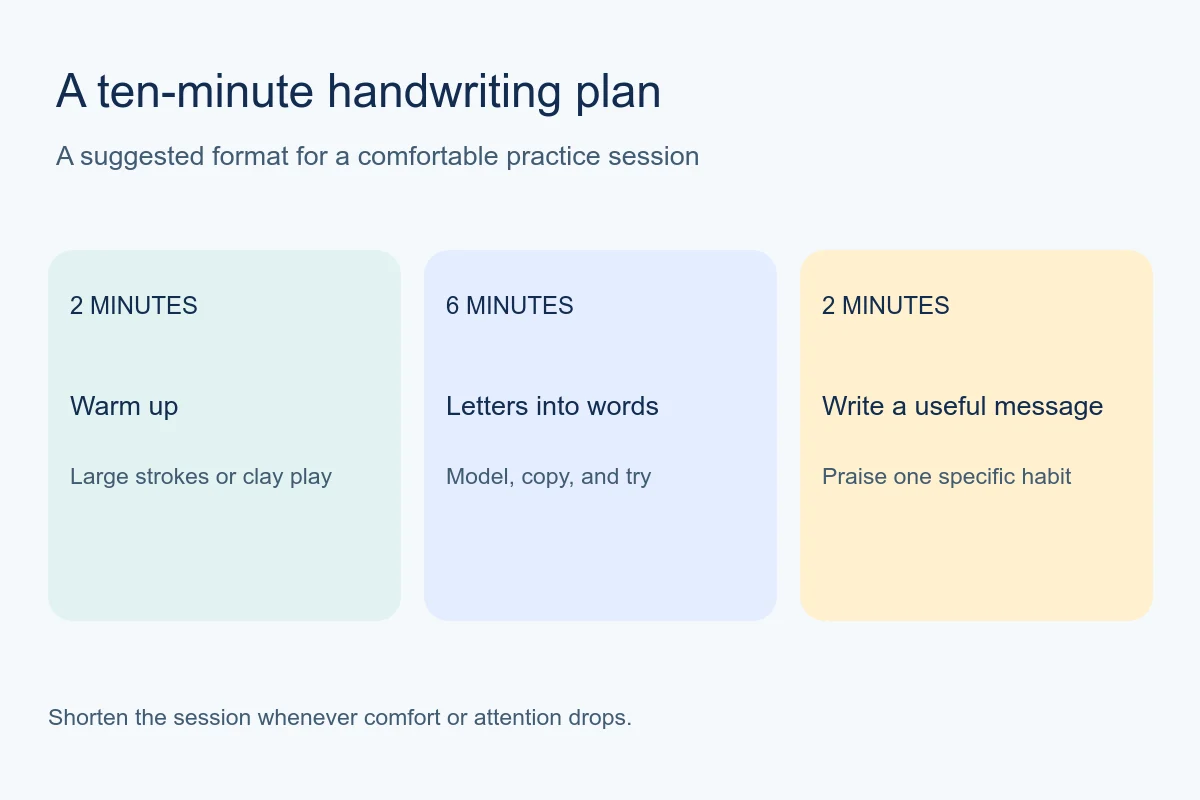
Minutes 1–2: Warm Up the Hands
Roll a small piece of modeling clay, move counters with tongs, draw large circles on a vertical surface, or trace broad lines in the air. The warm-up should feel playful and brief; it is preparation, not a separate workout.
Minutes 3–5: Practice One Movement Family
Group letters by movement instead of moving through the alphabet mechanically. For example, practice letters that begin with a similar curve or letters built from a tall downward stroke. Demonstrate one letter, name the movement, and let the child try it three to five times.
Minutes 6–8: Use the Letters in Words
Choose two or three short words containing the target letters. A child is more likely to transfer good formation when the letters appear in meaningful words rather than isolated rows. Names, favorite animals, current sight words, and lesson vocabulary are useful choices.
Minutes 9–10: Write for a Real Purpose
Finish with one short message: label a drawing, add an item to a shopping list, write a thank-you note, or answer a playful question. Praise one specific success—such as clear spacing or letters sitting on the line—then stop.
A Four-Week Progression
| Week | Main focus | Meaningful task |
|---|---|---|
| 1 | Comfort, posture, and basic strokes | Draw and label simple pictures |
| 2 | One letter family at a time | Write names and short familiar words |
| 3 | Letter size and baseline placement | Create a short list or caption |
| 4 | Word spacing and steady fluency | Write two or three connected sentences |
Keep a dated sample from the beginning and end of the month. Compare only the child’s own work. Improvement may appear as better comfort, more consistent spacing, or less need for reminders before it appears as perfect letter shapes.
Activities That Build Handwriting Skills Without Worksheets
- Large vertical drawing: tape paper to a wall or use an easel for broad shoulder and arm movement.
- Texture tracing: form letters with a finger in sand, salt, or a sealed sensory bag.
- Clay letters: roll clay into thin ropes and shape the target letter.
- Spacing tool: place a craft stick or finger after each word before beginning the next.
- Letter hunt: circle one well-formed target letter in a child’s own writing.
- Useful lists: write a snack list, game score, calendar note, or packing checklist.
For a ready-to-use page, try the free handwriting practice worksheet. Children still learning the alphabet may also benefit from the alphabet tracing A–Z printable.
How to Give Feedback That Helps
Correcting every letter can make a child avoid writing. Instead, choose one visible target before the activity begins. You might say, “Today we are helping every word have its own space.” Afterward, ask the child to find one example that meets the target and one place to improve.
When a letter is difficult, model it slowly beside the child rather than writing over the child’s work. Use neutral language: “This letter starts at the top,” or “Let’s move this word down to the line.” Save spelling and idea feedback for a different moment when handwriting is the main focus.
Common Handwriting Problems and Simple Adjustments
| What you notice | Try this first |
|---|---|
| Letters float above or below the line | Highlight the baseline and practice only three words. |
| Words run together | Use a finger or craft stick as a temporary spacer. |
| Writing becomes less clear across the page | Shorten the task and add a brief movement break. |
| Pencil pressure is very heavy | Try a softer pencil, relaxed warm-up, and fewer repetitions. |
| Child knows the letter but starts in a different place each time | Use one verbal movement cue and model it consistently. |
When to Ask for More Support
Children develop at different rates, and untidy writing alone does not identify a disorder. Speak with the teacher, pediatrician, or an occupational therapy professional if writing is consistently painful, extremely tiring, unusually slow, or preventing the child from showing what they know. Also seek guidance if difficulties continue despite appropriate instruction and practice.
Choose the Worksheet That Matches the Skill
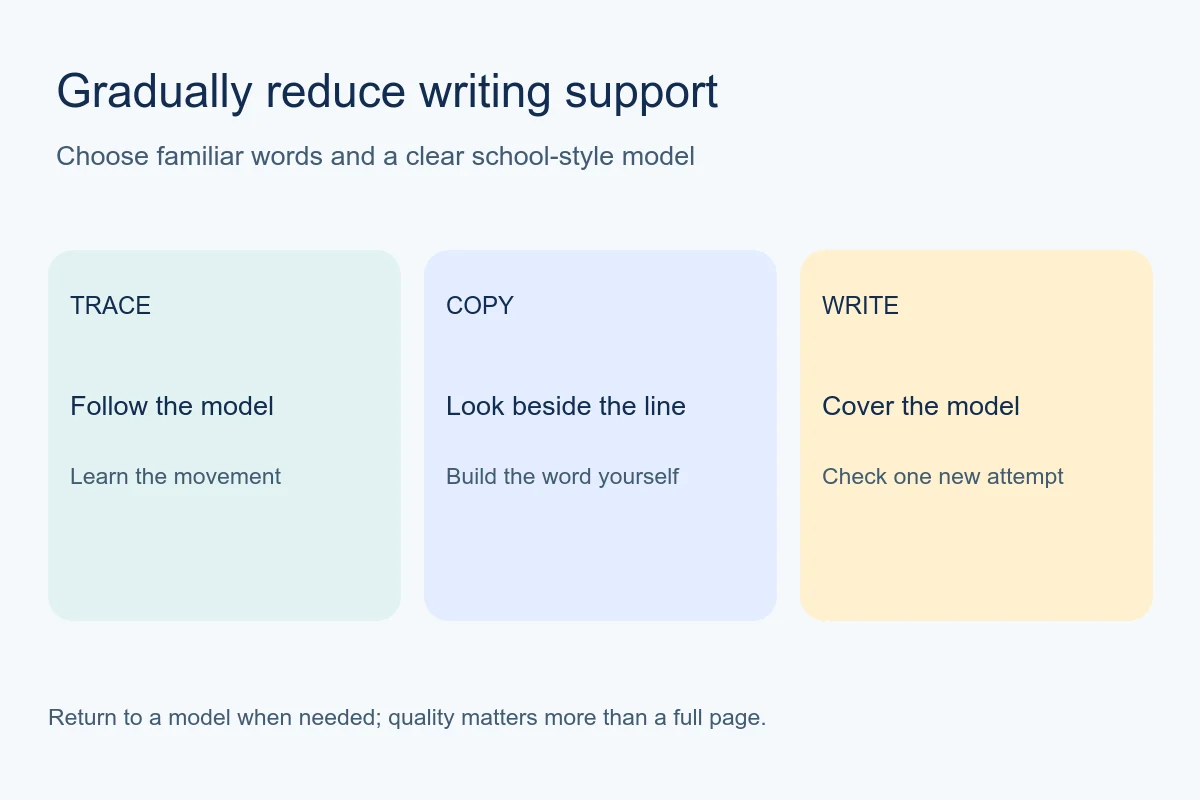
A helpful handwriting page gives the child enough support to succeed and enough independence to show what they can do. Begin with a word the child understands, such as their name or a familiar animal. Keep the spelling easy while you focus on the movement. Introducing unfamiliar spellings and a new letter shape at the same time makes it harder to identify the source of a problem.
Trace, Copy, Then Write Independently
Use tracing for a brief introduction to an unfamiliar shape. Next, place a clear model beside an empty space so the child copies the word. Finally, cover the model and ask for one independent attempt. Compare that attempt with the model together. Moving through these three stages gives you more information than a full page of tracing, because the last attempt shows what the child can remember.
If the independent attempt is difficult, return to the model and reduce the task to a single letter. If it is easy, use the letter in a phrase or a short message. Adjust the support within the session rather than treating every child as ready for the same worksheet format.
Adjust Line Size and Amount of Text
Larger guide lines can help a child who is still learning where a letter begins and ends. A writer who forms letters accurately may prefer smaller lines and fewer repetitions. Print a short test section before making several pages. Check whether the child can see the model, stabilize the paper, and reach the writing area comfortably.
Three Real Writing Tasks to Try This Week
Make a Snack List
Ask the child to choose three snacks and write one on each line. Before starting, agree on a single goal: visible spaces, lowercase letters, or keeping the words on the baseline. Let the child read the list to someone else afterward. Writing for a reader provides a reason to check legibility without turning the task into a neatness contest.
Label a Drawing
Invite the child to draw a place, animal, or vehicle, then add two labels and a caption. Write any unfamiliar word on a separate card if requested. A beginning writer can copy one label while dictating the caption. An experienced writer can add two connected sentences. Our creative writing prompts for different abilities provide subjects that work with this approach.
Record a Game Score
Make a simple score sheet with a name column and a number column. Ask the child to record the result of each round. Focus on clear numerals and keeping each entry inside its space. If the child also wants number practice, pair the score sheet with our step-by-step addition and subtraction guide. Keep the writing target small so the game remains enjoyable.
A Useful Before-and-After Review
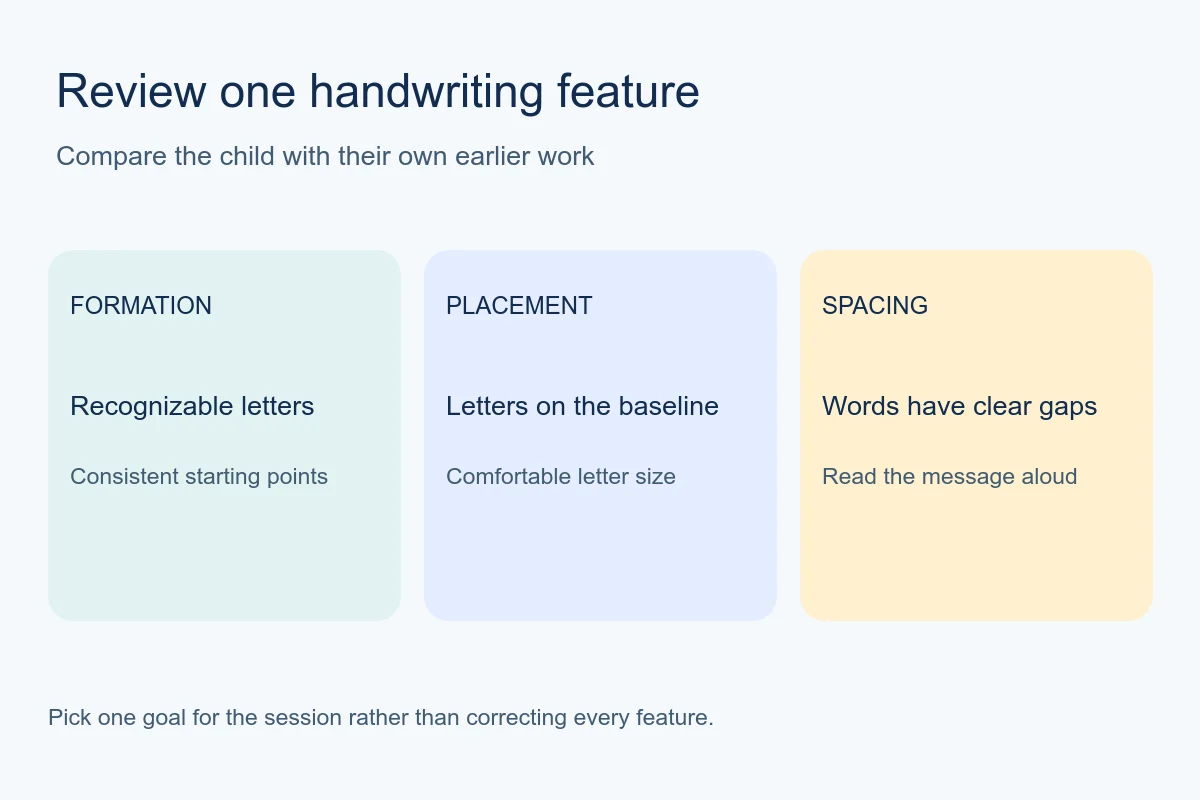
At the beginning of a week, ask for one familiar sentence and date the page. Repeat the same task at the end of the week using similar materials. Compare one feature only. For spacing, count how many word boundaries are easy to see. For baseline placement, choose three letters and check where they sit. Avoid judging the whole page with a broad label such as messy or beautiful.
Ask the child, “Which part is easier to read now?” Then choose a next step together. Progress may be uneven: a child can use a new habit in a short caption but forget it during a longer story. Return to a shorter task and build up gradually. The aim is to transfer one useful habit to everyday writing, not to produce a perfect practice sheet.
Oxford Owl’s handwriting guidance for families recommends stable seating, consistency with the school’s letter style, and meaningful reasons to write. The ten-minute routine in this article is a suggested home format, not a guarantee that every child will improve on the same timetable. Adapt the duration to the child’s comfort and current instruction.
Frequently Asked Questions
How long should a child practice handwriting?
For many early elementary children, five to ten focused minutes is enough. Quality usually drops when practice continues after the hand or attention is tired.
Should children trace letters?
Tracing can introduce a movement, but it should lead quickly to copying from a model and then writing independently. Endless tracing does not show whether the child can recall the letter formation.
Is cursive better than print?
Both can be legible and efficient. Follow the style used by the child’s school or curriculum so the visual and movement models remain consistent.
What should parents praise?
Praise a specific action the child can repeat: steady spacing, a comfortable pace, careful starting points, or checking the finished work.
What to Do Next
Choose one goal, prepare a ten-minute session, and create a short page using words your child cares about. The handwriting worksheet generator lets you adjust line size, practice pattern, and text without storing your child’s words.
Helpful reference: Understood: Ways to help a child improve handwriting.