
Quiet time activities for preschoolers work best when they are familiar, manageable, and genuinely calm for the particular child. A basket of books may suit one preschooler, while another needs a simple puzzle beside a caregiver. The aim is a gentle pause in the day, with appropriate supervision and room for individual needs.
This guide is for families of children around ages 3–5 who want practical choices for a quiet period. It includes a small activity menu, a setup checklist, and ways to adjust when the routine is difficult. For a broader mix of movement, creative play, and early learning, explore our preschool activities collection. Quiet time is one option within that mix, not a requirement to remain still for a fixed duration.
Choose Quiet Time Activities for Preschoolers With a Clear Purpose
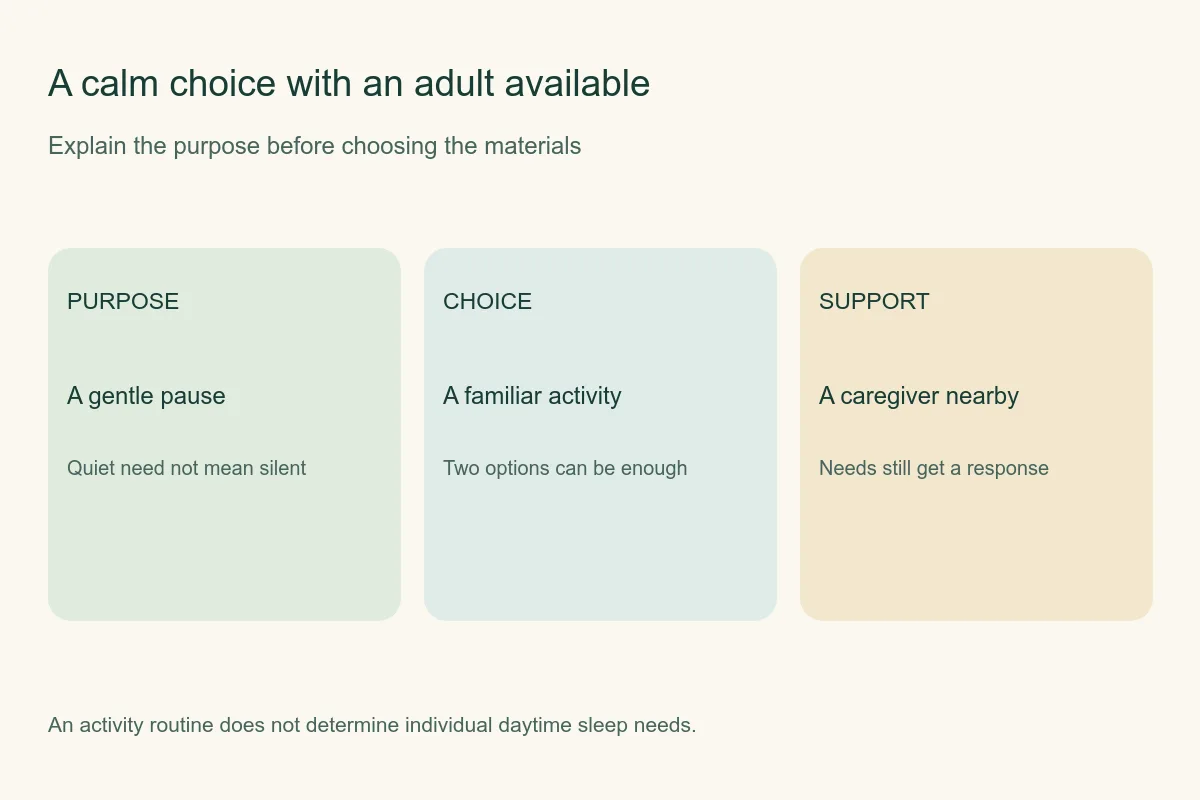
Decide what your family means by quiet time. It might be a short period of quieter play after lunch, a gentle transition between busy activities, or a chance to look at books while a younger sibling rests. Explain that purpose simply: “We are choosing calm things while the house slows down.”
Quiet does not have to mean silent. A child may whisper a story to a toy, turn pages aloud, or ask for help. Choose expectations that match the setting. If someone nearby is sleeping, explain which sounds are workable and move the activity farther away if that makes the arrangement easier.
A calm activity routine is different from deciding a child’s sleep needs. This guide does not tell families when to drop a nap or keep a sleepy child awake. If a preschooler needs rest, or sleep changes are causing difficulty, discuss the situation with their usual health professional and childcare provider.
NAEYC’s discussion of nappers and quiet keepers shares educators’ examples of quiet alternatives for children who are not sleeping. Those examples are practical reports, not evidence for a required home duration. The activities and routine below are original suggestions to adapt, without importing a classroom schedule into every household.
Six Quiet Time Activities for Preschoolers to Try
1. A small wordless-book basket
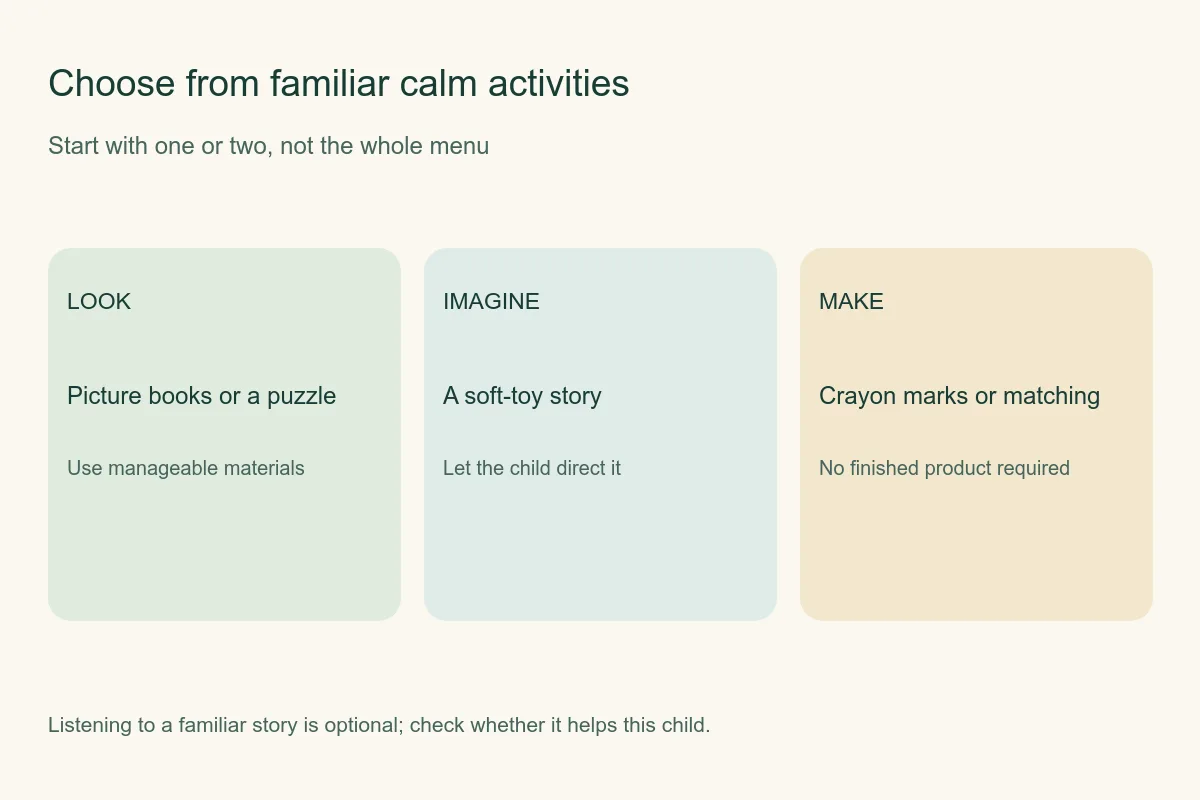
Choose two or three sturdy, familiar picture books with images the child enjoys. Show how to look at a page, find a detail, and turn it carefully. The child can retell the pictures, browse freely, or show a favorite scene to a toy. Independent reading is not required.
If the child repeatedly asks you to read, begin with a short shared look and explain what you will do nearby afterward. Avoid presenting every book on the shelf. A small selection is easier to handle and put away, and the child can help choose a different book another day.
2. A large-piece puzzle on a tray
Use a familiar puzzle with pieces suited to the child and everyone who may enter the space. Keep the picture guide visible and use a tray or clear surface so pieces stay together. Demonstrate one useful action, such as matching a distinctive shape, rather than completing the whole puzzle.
Choose a simpler puzzle if the child needs help with every piece. Quiet time is not the moment to introduce a difficult challenge that depends on constant instruction. Offer support when requested, and allow an unfinished puzzle to stay in place if there is a safe storage spot.
3. A soft-toy story corner
Place one or two soft toys beside a small book or a folded cloth used as pretend bedding. Invite the child to tell the toys a story or help them prepare for a pretend trip. Keep the setup simple and free from cords, unsuitable small accessories, or anything used to cover a child’s face.
The child may invent the entire story or repeat a familiar event. You do not need to correct the plot or ask questions after every sentence. If pretend play becomes lively and loud, save that version for another time and offer a different calm choice.
4. A drawing tray with familiar tools
Offer paper and a small selection of large crayons or other familiar tools appropriate for the child. Put the tray on a washable surface. “You can make marks or draw anything you like” leaves the decision with the preschooler. An accurate picture or completed coloring page is optional.
Avoid introducing scissors, glue, loose glitter, or other materials that need closer hands-on support during this period. Check supervision for any tool the child uses. Our adaptable preschool activity guide can help you choose a shared art activity for another part of the day.
5. A familiar listening story
A caregiver-read recording, library audiobook, or familiar spoken story can accompany looking at a book or resting beside a toy. Set the device yourself, keep the sound comfortable and low, and avoid leaving the child to browse an open feed. Screen-free listening does not require a special branded player.
Some children find sound distracting or become more animated during a story. Offer a quiet alternative and let them decline. Keep equipment, batteries, and cords inaccessible as appropriate. The useful question is whether listening helps this child settle comfortably, not whether another family relies on it.
6. A large-picture matching set
Use a few large picture pairs or familiar matching tiles without small loose components. Start with the pictures face up. The child can find pairs, sort them, or make a small arrangement. Avoid adding a timer, a score, or an adult quiz.
If a child has to ask what every picture is, choose a more familiar set. Preschool quiet time activities need a low entry barrier. Put a simple photo of the complete set on the container to help with cleanup, while keeping the adult responsible for checking materials are suitable and intact.
Set Up Quiet Time Activities for Preschoolers
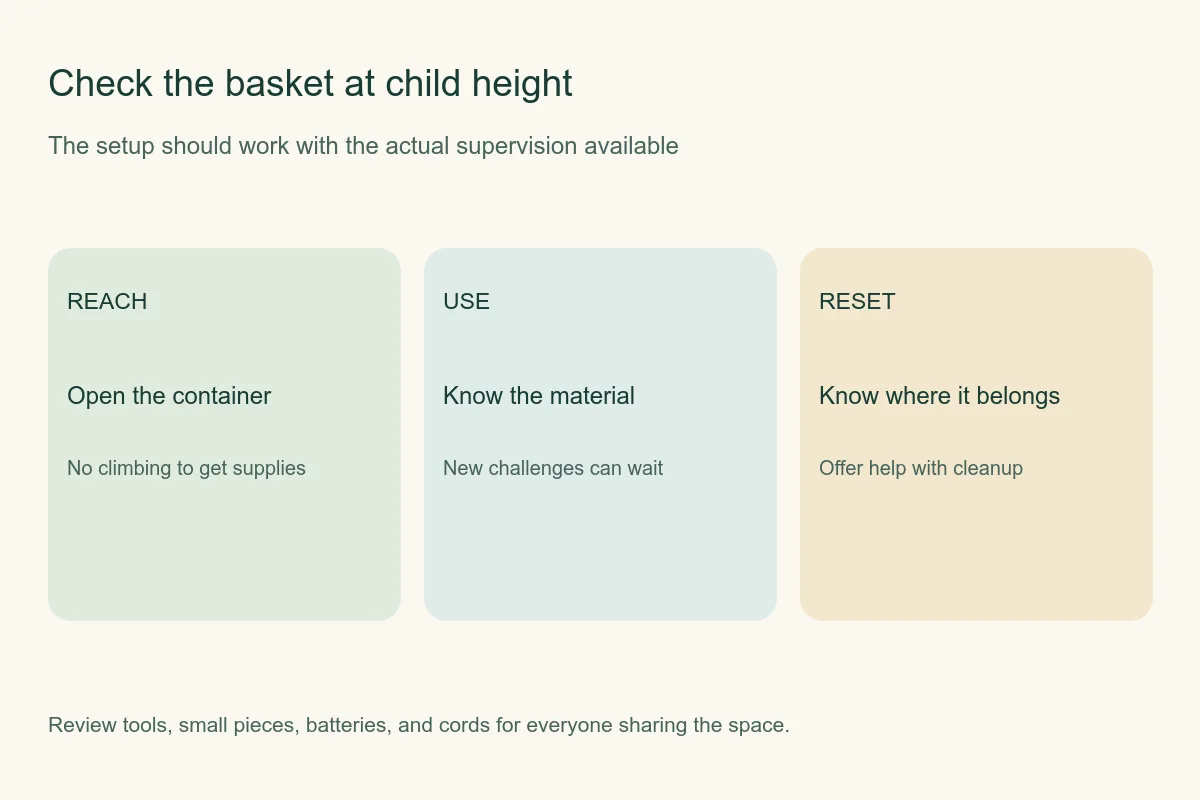
Choose two options from the menu, not all six. Show where each belongs and make containers easy to open. A child who cannot remove a lid or spread a book on the available surface will need help before play even starts. Check the setup at their height rather than from across the room.
Place the basket in an appropriate supervised area. Quiet time activities for preschoolers can happen beside an adult folding laundry or reading. The routine does not require a closed bedroom, and a timer does not replace supervision. Children should still be able to ask for help, use the toilet, and have their needs met.
Think about who shares the space. A younger sibling may need different materials and closer support. Put an older child’s unsuitable pieces elsewhere, and do not make the preschooler responsible for keeping a baby safe. Choose a time when the available caregiver can manage the actual group.
Keep a clear walking route and a comfortable place to sit or change position. Good light helps with books and puzzles; darkness is not required for quiet play. If you want a visual reminder, the visual schedule maker can show the sequence of lunch, calm choice, and the next activity. Its browser print option can create a paper reminder.
Introduce Quiet Time Activities for Preschoolers Gradually
Begin by using the materials together during an ordinary part of the day. Let the child practice choosing a book, opening the basket, and putting one item back. Familiarity matters more than decorating the basket. A new routine is harder when both the activity and the expectation are unfamiliar.
Use a clear beginning: finish the previous activity, check immediate needs, and offer a choice. “Would you like the picture book or the puzzle beside me?” is easier to follow than “Go be quiet.” Tell the child where you will be and what will happen afterward.
If a timer helps, start with an interval the child can manage and explain what its signal means. Do not use it to insist on a long period of distress. Return when you said you would. If the arrangement is consistently too difficult, shorten it, increase support, or choose a different part of the day.
Our multi-age homeschool planning guide can help families place a calm period around siblings’ needs. Keep expectations realistic: a young child’s quiet choice is not a guarantee that an adult can complete an uninterrupted work meeting.
Finish quiet time activities for preschoolers by reconnecting and helping reset the space. Ask one optional question such as “Was there something you liked?” rather than requiring a report of everything completed. The preschooler may have spent the time looking at the same page or talking to one toy, which can be a suitable use of a calm period.
Adjust When the Quiet Period Is Difficult
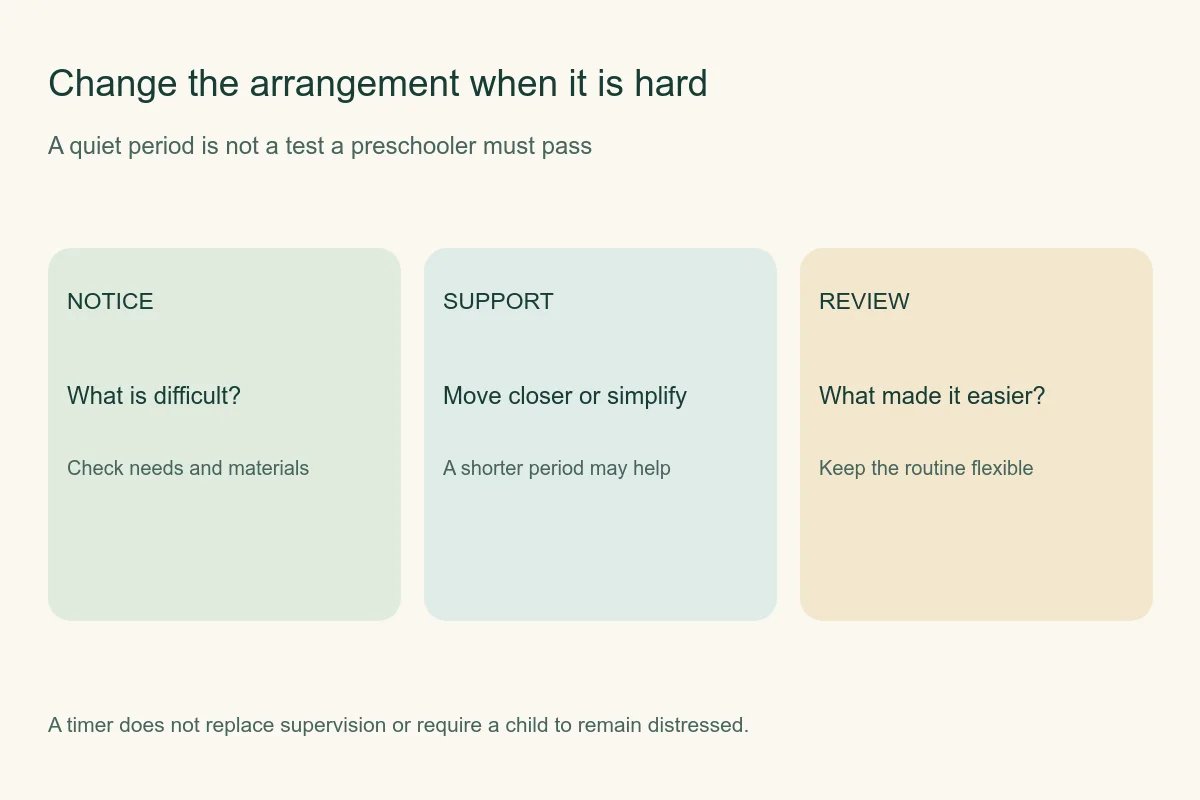
If the child keeps leaving the activity, look for the reason. They may need the toilet, movement, food, company, or help using the materials. A barrier that looks like refusing the routine may be a task that is too hard or a separation the child is not comfortable with yet.
Move closer before adding more rules. Try a book beside you, a shorter sequence, or an option that involves less fine-motor effort. Independent participation can grow from a supported start, but it does not need to happen on a deadline. Distress is information about the arrangement, not a reason to lock a child in a room.
The AAP’s indoor play suggestions include reading and creative play with an adult. They support keeping connection in the day; they do not validate a particular quiet-time schedule. Balance calm choices with opportunities to move and play with others.
Change one feature at a time: the activity, its difficulty, the location, or your distance. Keep a simple note about what helped. If quiet time activities for preschoolers repeatedly become a struggle, another routine may serve your family better. Quiet play is an option to adapt, not a test a child has to pass.
Frequently Asked Questions
How long should preschool quiet time last?
There is no single required home duration. Begin with a manageable period, stay available, and notice comfort and engagement. The child’s needs, the activity, and the setting all matter. A timer can show a predictable ending, but it should not be used to require prolonged distress or prevent a child from asking for help.
Can quiet time replace a nap?
A calm play routine does not determine whether a child still needs daytime sleep. Sleep needs vary, and a sleepy child may need rest rather than an activity to stay awake. Discuss persistent sleep concerns or childcare scheduling questions with the child’s usual health professional and provider. This guide focuses on activity choices, not nap transitions.
Does my child need special toys or an audio player?
No. Quiet time activities for preschoolers can use familiar books, a suitable puzzle, paper and crayons, or soft toys. Choose materials the child already knows how to use with the support available. A caregiver’s recorded story or a library audiobook is optional. More equipment is not a requirement for a useful calm period.
What if my child wants me to stay nearby?
Stay nearby during quiet time activities for preschoolers if that helps comfort and supervision. You can read, fold laundry, or sit beside the activity while the child makes choices. Practice the routine together and adjust gradually if needed. Asking for connection is compatible with quiet play; separation is not the goal.
Choose One Calm Option for Tomorrow
Quiet time activities for preschoolers are easier to use when the materials are familiar, the expectations are clear, and a caregiver is available. Choose one or two options, show the child how to begin, and keep the first attempt manageable. Notice which setup feels comfortable rather than measuring success by silence or a long timer. Reconnect afterward and help return materials to their place. Try the same small routine again before shopping for more supplies. If it does not meet the child’s needs, change the arrangement and keep calm play as one flexible part of the day.