
These eleven indoor activities for kids offer practical starting points for building, making, moving, playing games, and shared conversation at home. Choose by the child’s interests, available space, materials, and need for adult support. The age ranges are guides, not guarantees that every task suits every child.
So if your kids are going to be inside anyway, why not make that time count?
Key Takeaways
- Children average 7.5 hours of daily screen time — indoor activities offer skill-building alternatives (AACAP)
- The AAP recommends both structured and unstructured play for healthy brain development
- STEM activities build critical thinking, creativity, and problem-solving skills
- Hands-on art projects improve verbal intelligence and creative personality traits
- These 11 activities cover ages 3-12 and need minimal supplies
1. Kitchen Science Experiments — Best for Curious Minds (Ages 4-10)
In 2025, a systematic review of hands-on STEM learning found that children who engage in physical experimentation develop stronger critical thinking and problem-solving skills than those who learn through passive instruction alone (AIMS Press, 2025). Kitchen science puts those findings directly into your child’s hands — literally.

You don’t need a lab. You need baking soda, vinegar, food coloring, and 10 minutes.
Try these starter experiments:
- Volcano eruption: Baking soda + vinegar in a plastic bottle. Kids learn about chemical reactions while watching their creation fizz over.
- Density tower: Layer honey, dish soap, water, and oil in a glass. Each liquid sits on top of the next, teaching kids about molecular density.
- Invisible ink: Write with lemon juice on paper, then hold it near a warm lamp. The message appears like magic — but it’s actually oxidation.
What makes kitchen science so effective isn’t the “cool factor” alone. It’s the prediction-observation-explanation cycle. Before each experiment, ask your child: “What do you think will happen?” That single question transforms a fun mess into genuine scientific thinking.
Skills built: Hypothesis formation, cause-and-effect reasoning, measurement, patience
Supplies cost: Under $5 using pantry staples
2. Indoor Obstacle Courses — Best for Energy Burning (Ages 3-8)
Use couch cushions as stepping stones. Tape a “balance beam” line on the floor. Set up a tunnel with chairs and blankets. Time each run and watch your kids try to beat their own records.
How to build one in 5 minutes:
- Clear a path through your largest room
- Place pillows on the floor as “lava rocks” to hop between
- Tape a zigzag line for the balance beam section
- Drape a blanket over two chairs for the crawl-through tunnel
- End with 10 jumping jacks at the “finish line”
The AAP recommends that children get at least 60 minutes of physical activity daily, and they specifically advocate for play-based movement that builds coordination alongside fitness (American Academy of Pediatrics, 2018). Obstacle courses check both boxes.
Skills built: Gross motor coordination, balance, spatial awareness, self-competition
Supplies cost: Free — use furniture and household items
3. Art Journaling and Free Drawing — Best for Emotional Expression (Ages 5-12)
A 2024 randomized controlled trial published in PMC found that children who participated in regular visual arts practice showed measurable improvements in cognitive development, including gains in verbal intelligence and creative personality traits (PMC, 2024). Art isn’t just “fun.” It’s building your child’s brain.

Hand your child a blank notebook and a box of markers. That’s it. No coloring pages. No templates. The blank page IS the point.
Art journaling prompts that work:
- “Draw what you’re feeling right now using only colors — no words”
- “Design your dream treehouse with labels for every room”
- “Illustrate the weirdest animal you can imagine and write three facts about it”
- “Draw today’s weather and how it makes you feel”
From a homeschool parent: “My 7-year-old couldn’t tell me why she was upset after a tough math lesson. But she drew it — a giant mountain with a tiny person at the bottom. That picture started a conversation we wouldn’t have had otherwise.”
Why free drawing over coloring pages? Coloring inside pre-drawn lines develops fine motor control, sure. But free drawing develops creative confidence, spatial reasoning, and emotional vocabulary. It’s the difference between following GPS directions and reading an actual map.
Skills built: Fine motor control, emotional regulation, creative thinking, self-expression
Supplies cost: $3-8 for a sketchbook and markers
4. Building Challenges With Recyclables — Best for Engineering Thinking (Ages 4-10)
In 2025, researchers found that hands-on STEM projects help students develop core competencies including creativity, critical thinking, experimentation, and problem-solving (Super Science for Kids, 2025). Building with recyclables gives kids all of those skills — plus it costs nothing.
Save cardboard boxes, paper towel tubes, egg cartons, and plastic bottles for a week. Then give your child a challenge and step back.
Five building challenges by difficulty:
| Challenge | Age | Time | Materials |
|---|---|---|---|
| Tallest tower that stands alone | 3-5 | 15 min | Cardboard boxes, tape |
| Bridge that holds a toy car | 5-7 | 20 min | Cardboard, straws, tape |
| Marble run from top to bottom | 6-9 | 30 min | Paper tubes, boxes, tape |
| Catapult that launches a cotton ball | 7-10 | 25 min | Popsicle sticks, rubber bands, bottle cap |
| Zipline for a small toy figure | 8-12 | 30 min | String, straw, cardboard, tape |
The secret to making these educational: add constraints. “Build it using only 5 pieces of tape.” “Make it taller than your knee.” Constraints force problem-solving and prevent the project from becoming random stacking.
Why this works better than building kits: Pre-designed kits teach kids to follow instructions. Recyclable challenges teach them to create instructions. That’s a fundamentally different cognitive skill — and the one employers will pay for in 20 years.
Skills built: Spatial reasoning, structural engineering basics, resource management, creative problem-solving
Supplies cost: Free — use household recyclables
5. Sensory Bins and Tactile Play — Best for Young Learners (Ages 2-6)
A sensory bin is just a container filled with tactile materials and small objects to discover. It sounds simple because it is. The complexity happens inside your child’s brain.
Five sensory bin ideas:
- Rainbow rice: Dye rice with food coloring + vinegar. Add measuring cups and funnels. Teaches pouring, scooping, and color recognition.
- Water beads + ocean animals: Squishy, slippery, and fascinating. Develops fine motor grip strength.
- Dried pasta shapes: Mix different pasta types. Have kids sort by shape, size, or color. Pre-math classification skills.
- Kinetic sand + letters: Hide magnetic letters in kinetic sand. Kids dig them out and spell words.
- Shaving cream art: Spread shaving cream on a tray. Add food coloring drops. Swirl with a toothpick. Press paper on top for marbled prints.
For toddlers especially, sensory play builds neural pathways that support later academic skills. The child who squishes water beads at age 3 is developing the same fine motor control they’ll need to hold a pencil at age 5.
Skills built: Fine motor development, sensory processing, early math classification, vocabulary building
Supplies cost: $5-10
6. Board Games and Card Games — Best for Strategic Thinking (Ages 5-12)
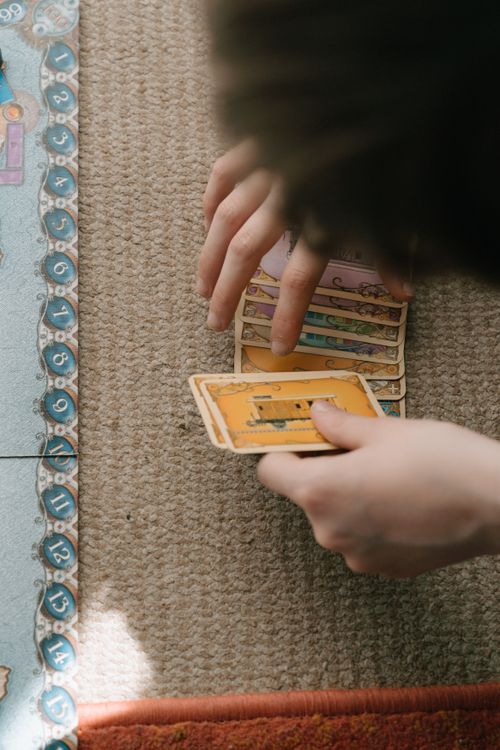
Not all board games are created equal, though. Candy Land teaches almost nothing. Here are the ones that actually develop skills:
Board games ranked by learning value:
| Game | Age | Key Skill | Why It Works |
|---|---|---|---|
| Blokus | 5+ | Spatial reasoning | Fitting shapes teaches geometry intuitively |
| Ticket to Ride | 8+ | Strategy + geography | Route planning across real map locations |
| Qwirkle | 6+ | Pattern recognition | Matching shapes and colors builds logic |
| Sushi Go | 7+ | Probability + planning | Card drafting teaches risk assessment |
| Rush Hour | 6+ | Sequential logic | Sliding puzzle builds computational thinking |
| Scrabble Junior | 5-8 | Vocabulary + spelling | Word formation with scaffolded difficulty |
The hidden benefit nobody talks about: Board games are one of the few activities where kids practice losing gracefully. That emotional regulation skill — handling disappointment without melting down — transfers directly to academic resilience. The child who can lose at Blokus without flipping the board can also handle getting a math problem wrong without shutting down.
Skills built: Strategic thinking, emotional regulation, turn-taking, math concepts, vocabulary
Supplies cost: $15-30 per game (one-time investment, years of use)
7. Indoor Gardening and Seed Sprouting — Best for Patience and Responsibility (Ages 4-10)
A child who plants a seed today won’t see results for 5-10 days. In a world of instant everything, that waiting period is surprisingly powerful.
Easy indoor plants for kids:
- Beans in a bag: Wet paper towel in a ziplock bag, add a bean, tape to a window. Sprouts visible in 3-5 days.
- Herbs on the windowsill: Basil, mint, and chives grow fast indoors. Kids can use them in cooking.
- Avocado pit: Suspend with toothpicks over water. Takes weeks but the root growth is fascinating.
- Grass heads: Fill a sock with soil and grass seed, tie it, add googly eyes. Water daily. “Hair” grows in a week.
- Microgreens: Sprinkle seeds on a wet paper towel in a shallow tray. Ready to eat in 7-10 days.
Give your child a “garden journal” to sketch their plants daily. This turns a gardening project into a science observation log — and quietly builds the habit of daily recording that formal science education requires later.
Skills built: Patience, responsibility, observation, biological concepts, daily routine building
Supplies cost: $3-8 for seeds and soil
8. Cooking and Baking Together — Best for Math in Disguise (Ages 4-12)
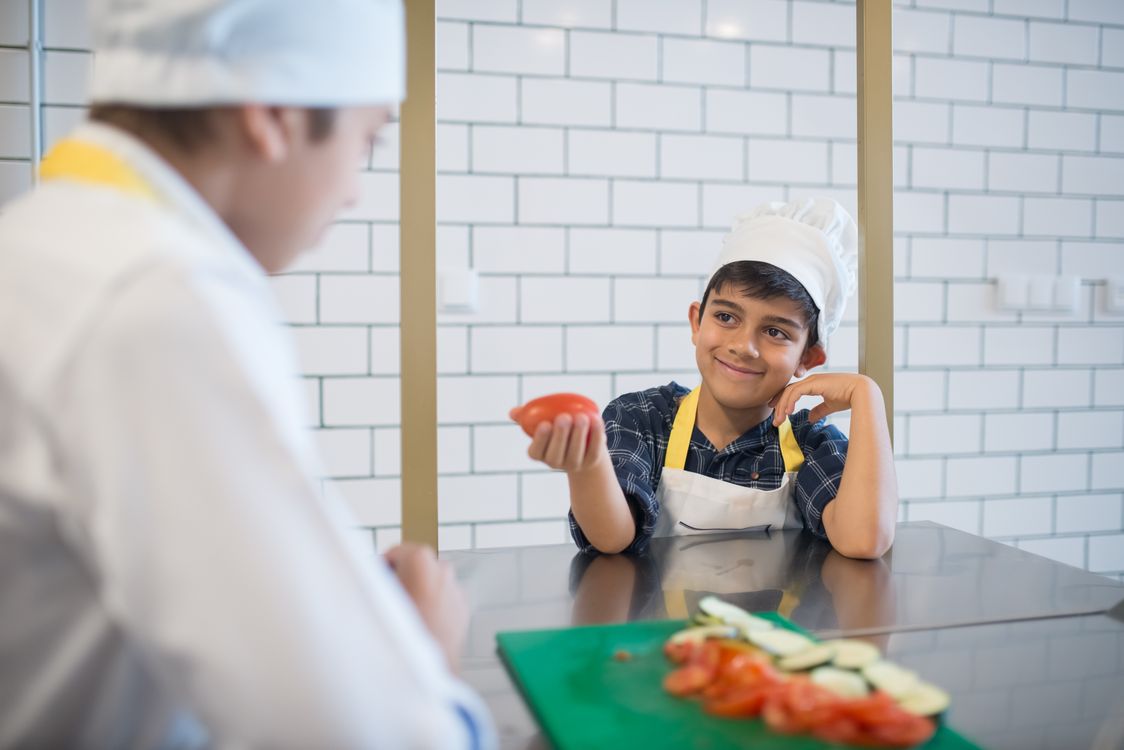
“We need to double this recipe. It calls for 3/4 cup of flour. How much do we need?” That question is a math lesson. It just happens to smell like cookies.
Age-appropriate kitchen tasks:
- Ages 4-5: Wash vegetables, stir batter, pour measured ingredients, tear lettuce
- Ages 6-7: Measure with cups and spoons, crack eggs, spread with a butter knife, read simple recipes
- Ages 8-9: Use a peeler, operate a hand mixer, follow multi-step recipes independently
- Ages 10-12: Use a stove with supervision, plan a full meal, calculate ingredient adjustments for different serving sizes
Five simple recipes kids can own:
- No-bake energy balls (rolling, measuring, mixing)
- Fruit smoothies (fractions, blender operation)
- Personal pizzas on English muffins (assembly, oven awareness)
- Banana pancakes — 2 ingredients only (mashing, flipping with supervision)
- Homemade trail mix (measurement, ratio comparisons)
Skills built: Measurement, fractions, reading comprehension, sequencing, safety awareness
Supplies cost: Varies — use ingredients you already have
9. Dramatic Play and Storytelling — Best for Language Development (Ages 3-9)
Research from PMC confirms that structured play programs produce significant impacts on cognitive development, including increases in verbal intelligence, verbal creativity, and social-emotional competencies (PMC, 2022). Dramatic play is the engine behind those gains — and it requires nothing but imagination and maybe a few costume accessories.
When a child pretends to be a doctor, they’re doing way more than playing. They’re sequencing events (“first I check the heartbeat, then I give the medicine”), building vocabulary (“stethoscope,” “diagnosis”), and practicing empathy (“how does the patient feel?”).
Dramatic play setups that work:
- Restaurant: Menu cards, notepad for orders, play food. Practices writing, math (adding up the bill), and social interaction.
- Post office: Envelopes, stamps (stickers), a cardboard mailbox. Kids write letters, address them, and “deliver” them.
- Veterinary clinic: Stuffed animals as patients, bandages, a clipboard. Builds care-giving vocabulary and sequencing.
- News reporter: A hairbrush microphone, a “camera” (cardboard box), news scripts. Practices reading aloud, summarizing, and presentation skills.
- Grocery store: Empty food boxes, a calculator, play money. Teaches adding, making change, and decision-making.
Don’t script the play. Set up the environment, introduce the scenario, and step back. The AAP specifically recommends unstructured imaginative play where children direct the narrative themselves (HealthyChildren.org).
Skills built: Vocabulary expansion, narrative sequencing, empathy, social skills, creative writing foundations
Supplies cost: Free to $10 using household items and recyclables
10. Puzzle and Logic Games — Best for Focus and Persistence (Ages 5-12)
Logic games by age and skill level:
| Game/Puzzle | Age | Focus Skill | Time per Session |
|---|---|---|---|
| Jigsaw puzzles (24-100 pcs) | 3-6 | Pattern matching, spatial reasoning | 15-30 min |
| Jigsaw puzzles (300-500 pcs) | 7-12 | Sustained focus, patience | 30-90 min |
| Tangrams | 5-10 | Geometric thinking | 10-20 min |
| KenKen puzzles | 7-12 | Arithmetic + logic | 10-15 min |
| Sudoku (easy) | 8-12 | Deductive reasoning | 10-20 min |
| Logic grid puzzles | 9-12 | Elimination reasoning | 15-30 min |
Start easy. If a child fails at a puzzle that’s too hard, they learn “puzzles are frustrating.” If they succeed at one that’s slightly challenging, they learn “I can figure hard things out.” That second belief changes everything.
Skills built: Sustained attention, pattern recognition, logical deduction, frustration tolerance
Supplies cost: $5-15 per puzzle or game
11. Yoga and Mindfulness Activities — Best for Self-Regulation (Ages 3-12)
The Boys & Girls Clubs of America report that STEM activities build critical thinking and creativity — skills that open doors to the fastest-growing careers (BGCA, 2025). But alongside cognitive skills, children need emotional regulation. Yoga and mindfulness build the internal skills that make all other learning possible.
A child who can’t calm down after a frustrating math problem can’t learn the next concept. A child who practices breathing techniques has a tool to reset.
Kid-friendly yoga and mindfulness activities:
- Cosmic Kids Yoga (YouTube): Story-based yoga sessions designed for ages 3-8. Each episode follows an adventure that keeps kids moving for 15-25 minutes.
- Breathing exercises: “Smell the flower” (breathe in through the nose), “blow out the candle” (exhale through the mouth). Simple enough for a 3-year-old.
- Body scan: Lie down, close eyes, notice each body part from toes to head. Takes 5 minutes. Builds interoception — the ability to notice how your body feels.
- Mindful jar: Fill a jar with water, glitter glue, and glitter. Shake it. Watch the glitter settle. “Your thoughts are like the glitter — they settle when you’re still.”
- 5-4-3-2-1 grounding: Name 5 things you see, 4 you hear, 3 you can touch, 2 you smell, 1 you taste. Resets sensory overwhelm in under 2 minutes.
Skills built: Emotional regulation, body awareness, focus, stress management, flexibility
Supplies cost: Free (YouTube) to $10 (yoga mat, glitter jar supplies)
Quick Comparison: All 11 Activities at a Glance
| Activity | Best Age | Cost | Prep Time | Key Skill | Screen-Free? |
|---|---|---|---|---|---|
| Kitchen science experiments | 4-10 | Under $5 | 10 min | Critical thinking | Yes |
| Indoor obstacle courses | 3-8 | Free | 5 min | Gross motor skills | Yes |
| Art journaling | 5-12 | $3-8 | 2 min | Emotional expression | Yes |
| Building with recyclables | 4-10 | Free | 5 min | Engineering thinking | Yes |
| Sensory bins | 2-6 | $5-10 | 15 min | Fine motor development | Yes |
| Board games | 5-12 | $15-30 | 2 min | Strategic thinking | Yes |
| Indoor gardening | 4-10 | $3-8 | 10 min | Patience + responsibility | Yes |
| Cooking together | 4-12 | Varies | 10 min | Math concepts | Yes |
| Dramatic play | 3-9 | Free-$10 | 5 min | Language development | Yes |
| Puzzles + logic games | 5-12 | $5-15 | 1 min | Sustained focus | Yes |
| Yoga + mindfulness | 3-12 | Free | 0 min | Self-regulation | Mostly |
How We Selected These Activities
Use these practical criteria to decide which activity fits your family; no survey or hands-on testing claim is made:
- Clear purpose: Choose something the child can do, describe, compare, build, or explain. Educational value is not a guarantee of a measured outcome.
- Minimal supplies: Nothing requires specialty equipment or expensive kits. Most use items already in your home.
- Age range: Each activity works across at least a 3-year age span, so siblings can participate together.
- Homeschool integration: Every activity maps to at least one academic subject area (science, math, language arts, PE, art).
- Adaptability: Change the materials, amount, or response so a familiar idea can be revisited without promising that every child will enjoy it.
Review supervision for every activity. Heat, tools, small parts, movement, and younger siblings can all change the support needed; an indoor label does not mean an activity is safe to do alone.
Frequently Asked Questions
What are the best indoor activities for kids on rainy days?
Choose an activity that fits your space, materials, adult support, and the child's interests. Building with large blocks, a paper collage, a puzzle, or a short shared game can be useful starting points. No activity guarantees a particular length of attention.
How do I keep indoor activities educational without making them feel like school?
Give the child a clear purpose and room to make choices. Ask what they notice, invite a prediction, or compare two designs. Provide the explanation or model they need without turning every moment of play into a quiz.
What indoor activities work for multiple ages at the same time?
Use one shared topic with different responses: a younger child might draw a building while an older learner measures it or records a design change. Choose materials and adult supervision for everyone present; an older sibling is not a replacement for appropriate care.
How much time should kids spend on indoor activities versus screen time?
This activity guide does not prescribe an individualized screen-use limit. Plan a balanced routine with rest, conversation, reading, movement, and play around the child's needs. For health-related questions, consult suitable professional guidance rather than a universal number from an activity list.
Are STEM activities really that important for young children?
A suitable STEM activity can give a child a reason to observe, build, compare, measure, and explain. Choose a manageable question and provide adult support. Participation does not guarantee a specific developmental gain or a future academic outcome.
Conclusion
Your kids are going to spend time indoors — that’s just reality in 2026. The question isn’t whether they’re inside. It’s whether that time builds skills or burns hours.
Every activity on this list connects to real developmental research. Kitchen science builds critical thinking. Art journaling builds emotional vocabulary. Cooking teaches fractions without a single worksheet. And the best part? Most of these cost under $10 or are completely free.
Start with one. Pick the activity that matches your child’s current interest — science, art, building, cooking, or movement. Try it this week. See what clicks. Then add another.
Your living room is already a classroom. These 11 activities just make it official.
Sources referenced in this article, with retrieval dates:
- American Academy of Child & Adolescent Psychiatry, “Children and Watching TV,” retrieved 2026-06-22, https://www.aacap.org/AACAP/Families_and_Youth/Facts_for_Families/FFF-Guide/Children-And-Watching-TV-054.aspx
- Earth.com, “Kids now spend twice as much time playing indoors than outdoors,” retrieved 2026-06-22, https://www.earth.com/news/kids-playing-indoors-outdoors//
- Johns Hopkins Institute for Education Policy, “Homeschool Growth: 2024-2025,” retrieved 2026-06-22, https://education.jhu.edu/edpolicy/policy-research-initiatives/homeschool-hub/homeschool-growth-2024-2025/
- American Academy of Pediatrics, “The Power of Play,” retrieved 2026-06-22, https://publications.aap.org/pediatrics/article/142/3/e20182058/38649/The-Power-of-Play-A-Pediatric-Role-in-Enhancing
- HealthyChildren.org (AAP), “Let Them Play,” retrieved 2026-06-22, https://www.healthychildren.org/English/news/Pages/healthier-children-play-according-to-the-AAP.aspx
- AIMS Press, “Hands-on STEM learning experiences using digital technologies,” retrieved 2026-06-22, https://www.aimspress.com/article/doi/10.3934/steme.2025009?viewType=HTML
- Super Science for Kids, “Why Hands-On STEM Learning Beats Traditional Classrooms,” retrieved 2026-06-22, https://www.superscienceforkids.com/hands-on-stem-learning-benefits/
- PMC/NCBI, “Indoor Loose Parts Play and Cognitive Development: A Systematic Review,” retrieved 2026-06-22, https://www.ncbi.nlm.nih.gov/pmc/articles/PMC12112344/
- PMC/NCBI, “Developing Children’s Creativity through Play,” retrieved 2026-06-22, https://pmc.ncbi.nlm.nih.gov/articles/PMC9590021//
- PMC/NCBI, “Cognitive enrichment through art: a randomized controlled trial,” retrieved 2026-06-22, https://pmc.ncbi.nlm.nih.gov/articles/PMC10993461//
- DemandSage, “Average Screen Time Statistics 2026,” retrieved 2026-06-22, https://www.demandsage.com/screen-time-statistics/
- Lurie Children’s Hospital, “Screen Time Statistics Shaping Parenting in 2025,” retrieved 2026-06-22, https://www.luriechildrens.org/en/blog/screen-time-2025/
- ParentMap / C.S. Mott Children’s Hospital, “One in 10 Young Kids Rarely Play Outside,” retrieved 2026-06-22, https://www.parentmap.com/raising-kids/kids-outside-time-decreasing-national-survey/
- Boys & Girls Clubs of America, “Five Fun STEM Activities for Kids,” retrieved 2026-06-22, https://www.bgca.org/news-stories/2025/November/stem-activities-for-kids/
Can a Building Project Fill an Indoor Afternoon?
It can offer several connected activities, but no project guarantees a full afternoon of independent attention. Start with a clear, manageable challenge: build a small bridge from scrap paper or large blocks, test it with adult-approved materials, sketch a change, and try again. Include breaks and cleanup rather than treating a long sitting time as the goal.
For a more structured engineering task with older children, use the tower challenge worksheet. For a shorter option, use the activity finder. The activities collection links to broader choices for different settings.