
Cooperative games for kids give a family something to solve together. They can be useful when a child loves playing but finds a missed turn or a loss hard to handle. You do not need a new board game: paper, large blocks, picture cards, and a shared goal can get you started.
This guide offers five original home game formats, clear rules, and ways to keep one confident player from taking over. They suit roughly ages 4–10 with adult support and adapted materials. For a wider choice of play formats, explore our educational games collection. Choose one short round, explain how everyone contributes, and leave room for a break.
How to Choose Cooperative Games for Kids
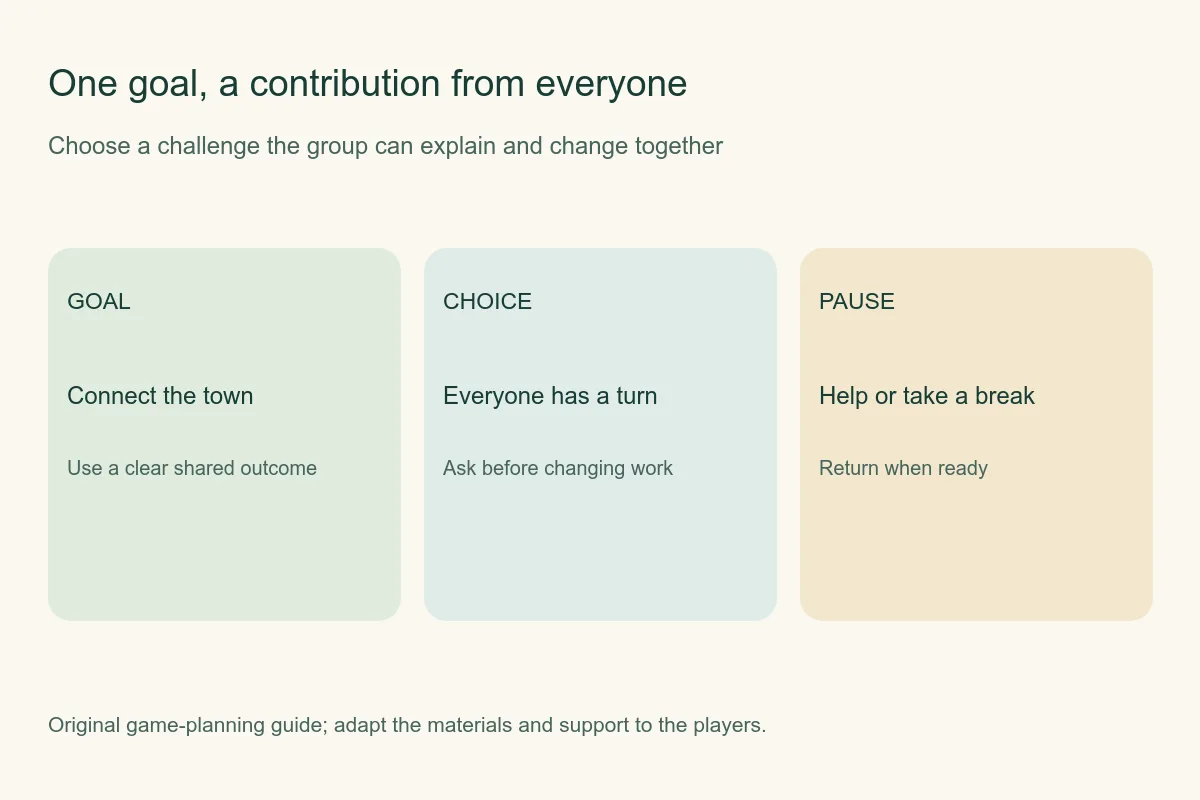
A cooperative game gives the players a common outcome. Instead of one person beating another, the group tries to finish a puzzle, build a route, remember a sequence, or solve a problem. Cooperation is more than putting children on the same team: each person needs a meaningful way to affect what happens.
Begin with a goal you can explain in one sentence: “Let us make a road that connects every building.” Show an example turn, then put that example aside. Keep the first version predictable, with no timer or surprise penalty. A child who is still learning the rules has enough to think about without an extra race.
Check three things before inviting everyone over. Can each child understand the goal? Can each child handle the materials, or use an accessible alternative? Does the game give each player a real decision? If the answers are unclear, change the task rather than asking a younger sibling to watch an older one do everything.
The American Academy of Pediatrics’ indoor play ideas describe taking turns on a drawing and thinking through possibilities together. Those broad principles inform the approach here. The five rule sets below are original suggestions, not tested interventions or a ranked list of commercial products.
Five Cooperative Games for Kids Using Household Supplies
1. Connect the town
Draw three buildings on separate sheets: a library, a home, and a park. Place them on a table. Offer large blocks or wide paper strips as road pieces. The shared goal is a continuous road touching all three destinations. Keep it on the table or floor; children do not walk on the pieces.
Each player adds one piece, then explains or points to what it connects. Another player checks for a gap. Pieces may be moved on a later turn, so a first idea does not trap the group. Finish by tracing a toy’s journey with a finger. For a younger learner, use two destinations; for an older learner, add a river drawn on paper that the road must go around.
2. Find the missing picture
Place four familiar picture cards face up. Everyone names them together. One person closes their eyes voluntarily while another covers a picture with a sheet of paper. The group describes what they remember and agrees on the missing picture before lifting the cover. Avoid tiny loose objects if younger children share the space.
Rotate the covering role. The child who notices first can offer a clue instead of blurting out the answer: “It was something we eat.” Make the game easier by leaving fewer cards visible, or harder by changing one card’s position. Use the language the children know best; the game does not need to become an English vocabulary test.
3. Draw a shared creature
Give everyone the same large sheet and one familiar drawing tool each. Agree on a creature with three features, such as wings, round feet, and a long tail. Take turns adding one feature or detail. The shared goal is a picture that includes all three agreed features and something contributed by each player.
A player may describe a mark for someone else to draw, point to a location, or choose a color. Nobody erases another person’s contribution without asking. At the end, each child names something they like about another person’s idea. If children want separate sheets, make a shared habitat from their individual drawings instead.
4. Tell the rescue story
Start with a simple problem: a toy animal needs a way across a pretend puddle. Each person adds one sentence or spoken idea. The group must give the animal a safe route, a helper, and a place to rest. An adult can record contributions, but writing is optional.
Use a visible three-box checklist for the route, helper, and resting place. A younger child can choose between two suggestions. An older child can explain how an earlier idea helps solve the problem. Keep the challenge imaginary; there is no real climbing, lifting another child, or testing a makeshift bridge with bodies.
5. Build the pattern together
Make an easy model using large colored paper squares: red, blue, red, blue. Invite one child to point to the next color and another to place it. Swap roles after two turns. The group succeeds when it extends the pattern and can explain what repeats.
Increase difficulty by changing the pattern, not by adding speed. Try red, red, blue only after the first version is familiar. Children who cannot reliably distinguish colors can use shapes or textures they can identify. If you want a different format afterward, our indoor and group game ideas offer more ways to adapt play.
Make Cooperative Games for Kids Fair Across Ages
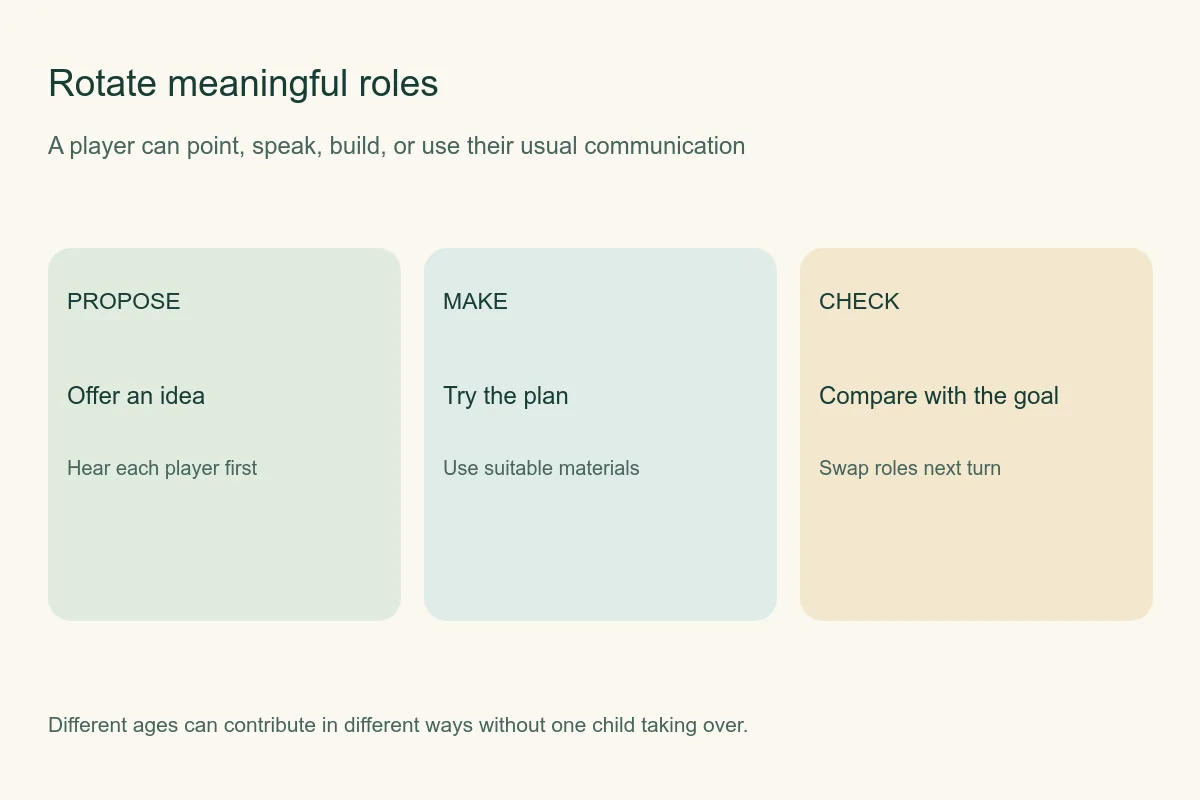
Cooperative games for kids can still feel competitive when the quickest player makes every decision. Assign rotating roles before starting: proposer, maker, and checker. The proposer offers an idea, the maker puts it into place, and the checker compares it with the goal. With two players, combine the last two roles and swap next turn.
Do not give the same child the “easy job” every time. Choosing a destination or deciding whether a route is complete can be as meaningful as moving pieces. Ask privately which kind of participation feels comfortable. Some children prefer pointing, using a communication aid, or watching a model before joining.
Try this language when one player takes over: “You have a plan. Let us hear one idea from everyone before choosing.” If someone changes another child’s work, pause and restore the agreed boundary. Sharing a goal does not remove the right to say no to unwanted help.
Mixed ages do not need identical tasks in cooperative games for kids. A four-year-old might connect two buildings while an eight-year-old checks a longer route. Both contribute to the same town. Keep reading demands optional, and avoid turning every round into a quiz. Play can remain worthwhile even when nobody names an academic skill.
What If a Child Still Gets Upset?
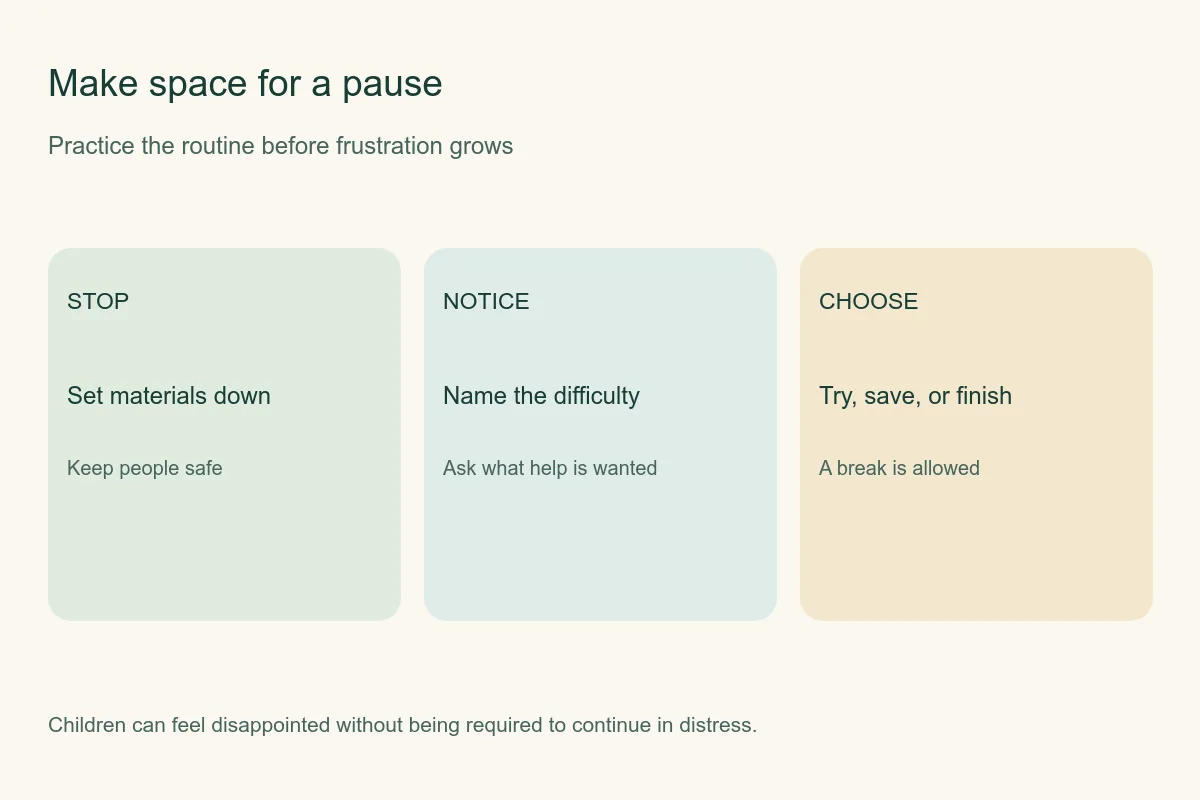
A shared goal does not guarantee a calm game. A tower can fall, a preferred idea can be rejected, or a sibling can touch a favorite piece. Teach a pause routine before starting: stop moving materials, make space, ask what help is wanted, then decide whether to try again or finish.
When frustration rises, use a short description: “The road broke, and you wanted it to work.” Offer two manageable options, such as rebuilding together or leaving the pieces for later. A child does not need to smile, congratulate anyone, or complete the round to prove they are learning.
Keep people and materials safe. Stop hitting or throwing, reduce the audience, and help everyone settle before discussing rules. Avoid threats that nobody will want to play with the child. Describe the behavior and the next step instead. When calm returns, practice the small repair that was difficult, such as asking before moving a piece.
Our life and social skills guide offers related starting points for communication and coping. A game is only one setting to practice these skills. If strong distress repeatedly affects many daily activities, discuss the pattern with a qualified professional who knows the child.
Plan Short Rounds of Cooperative Games for Kids
Choose a familiar setting and avoid starting when everyone is hungry or exhausted. Spend a little time demonstrating, play one round, and ask whether the children want another. There is no required number of minutes. Ending with interest still available can make returning easier than stretching the activity until arguments begin.
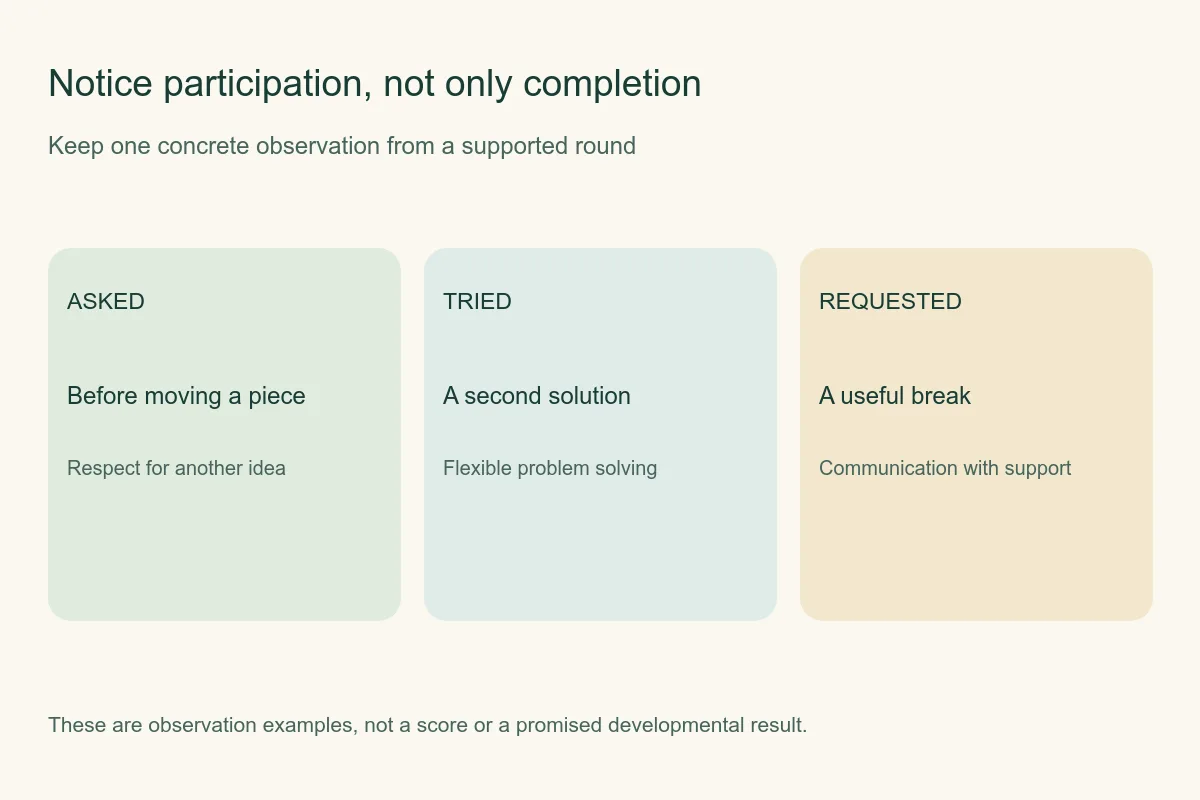
Record one observation, not a personality label. “Asked before changing a road” is more useful than “was good.” Other helpful notes include waiting with an adult’s reminder, suggesting a second solution, or requesting a break before throwing something. Notice how much support the task needed, as well as whether it was completed.
The Harvard Center on the Developing Child’s activities guide describes play that involves rules, attention, and flexible thinking. It does not establish a guaranteed result for these particular games. Use the ideas as opportunities for practice and adjust them to the actual children in front of you.
When a child wants to return to competitive play, choose a familiar short game and discuss its rules first. Cooperative games for kids can stay in the family mix alongside other formats. For a fresh shared challenge, use the screen-free activity finder and review the materials and supervision each choice needs.
Frequently Asked Questions
Are cooperative games only for children who dislike losing?
No. Cooperative games for kids can suit children who enjoy building, storytelling, or solving a problem with someone else. A shared goal offers another kind of play rather than a punishment for being upset. Keep individual choices meaningful, rotate roles, and ask whether the players enjoy the format before extending it.
Should I always let my child win competitive games?
Agree on fair rules and support before playing, rather than secretly changing an outcome. A practice round, a simpler version, or an openly agreed handicap can make a game accessible. Model disappointment calmly when you lose. If the child becomes overwhelmed, pause and help them settle rather than forcing another round.
Can a preschooler and an older sibling play together?
Yes, when the challenge allows different contributions. A younger child might choose a picture while an older child explains a route or records a story. Use suitable materials and rotate meaningful roles. If the older child controls every decision, simplify the shared task or offer separate projects that connect afterward.
What if my child wants to stop halfway through?
Help them state that they need a break, then decide what happens to the unfinished game. You might save the arrangement, finish together, or put the materials away. Discuss expectations before the next round. Leaving respectfully is a useful skill; a child should not have to remain in escalating distress to complete play.
Choose One Game for Today
Start with a shared goal, give everyone a real choice, and show how to pause before frustration builds. Those three decisions matter more than an impressive setup or a long session. Pick the town, picture, drawing, story, or pattern game that matches materials you already have. Play one supported round, then ask what the children would change. Keep a brief note about participation and the help needed. Next time, change just one feature so you can see whether the new version makes cooperative games for kids more enjoyable for your family.